Welcome to Lishui Tengyu Pet Food Co., Ltd.
[email protected]

 English
 Español
 Deutsch


Industry News

Industry News
Do Dental Chews Work for Dogs? Evidence from Two Studies
Do dental chews work for dogs? Research suggests that certain tested dental chews can help reduce plaque and tartar accumulation when used regularly. However, the results depend on the individual product and how it is used.
Two published controlled studies provide useful evidence. Rather than relying only on general claims about cleaner teeth, these studies measured changes in plaque, calculus and other oral health indicators. Here is what the researchers tested, what they found and what the results mean for everyday dental care.

Study One: One Dental Chew a Day for Four Weeks
A 2005 study published in the Journal of Veterinary Dentistry evaluated a dental hygiene chew by comparing dogs receiving the chew with dogs eating the same diet without it.
The study lasted four weeks. Dogs in the treatment groups received one dental chew each day. The researchers also compared versions with and without a natural antimicrobial additive to determine whether that ingredient provided an additional benefit.
At the end of the trial, the researchers assessed gingivitis severity and the accumulation of dental plaque and calculus, also known as tartar.
What Did the Study Find?
Dogs receiving a daily dental chew had significantly less plaque, calculus and gingivitis than dogs in the control group.
| Outcome Measured | Result Compared With the Control Group |
|---|---|
| Plaque accumulation | Significantly lower (P = 0.0004) |
| Calculus accumulation | Significantly lower (P = 0.0001) |
| Gingivitis severity | Significantly lower (P = 0.02) |
These P values indicate statistically significant differences between the groups; they are not percentage reductions.
Adding the tested antimicrobial ingredient did not further improve the product's effectiveness. In this trial, the dental chew without that additive also provided measurable benefits.[1]
Study Two: Comparing Three Dental Chews Over 28-Day Periods
A 2020 study published in the Journal of Animal Science compared three commercial dental chews with a diet-only control condition in 12 adult female Beagles.
The researchers used a crossover design consisting of four 28-day periods. Each dog received different treatments across the periods. At the beginning of each period, the dogs' teeth were professionally cleaned and polished.
All dogs ate the same commercial dry diet. Under the dental chew treatments, they also received one chew each day. No other treats, chew toys or dental care interventions were allowed during the trial.
At the end of each period, the same veterinary dentist assessed plaque, calculus and gingivitis without knowing which treatment each dog had received. The researchers also measured breath volatile sulfur compounds, which are associated with oral malodor.
What Did the Study Find?
The researchers reported significant reductions of approximately 12%–17% in plaque coverage and thickness scores and 20%–35% in calculus coverage scores, depending on the product and measurement.
The three chews did not perform identically. Two significantly reduced both plaque coverage and plaque thickness compared with the control condition. All three significantly reduced calculus coverage. All three also lowered breath volatile sulfur compound concentrations compared with the control on day 27.[2]
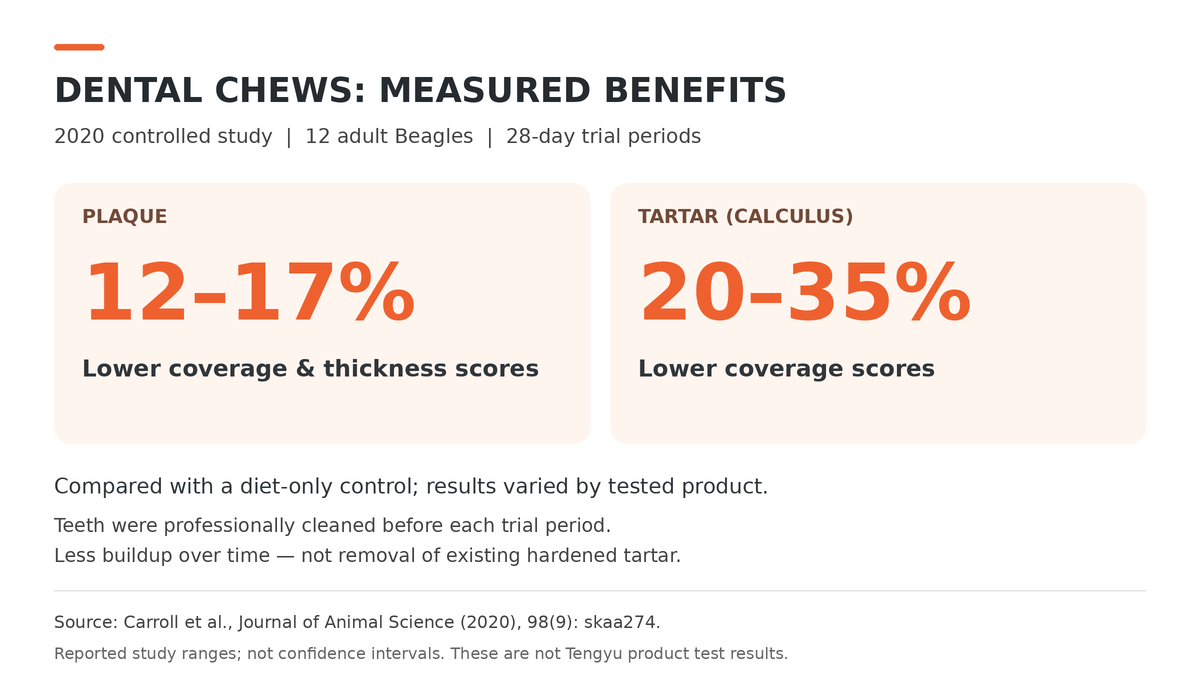
How to interpret these percentages: Each trial period began with professionally cleaned teeth. The results therefore show reduced accumulation over the following 28 days. They do not mean that the chews removed 20%–35% of existing hardened tartar.
What Do These Studies Tell Us About Dental Chews?
Together, the studies support a clear conclusion: certain tested dental chews can help reduce plaque and tartar accumulation when given regularly. The 2005 study also found significantly less gingivitis in dogs receiving the tested chew.
However, these findings apply to the products and conditions evaluated. They do not establish that every product described as a dental chew delivers the same results, and the reported percentages should not be presented as performance claims for untested products.
The 2020 trial was small and used adult Beagles. It provides useful evidence of short-term effects on measured oral health indicators, rather than proof of identical benefits across all breeds or long-term prevention of dental disease.
Why Does Effectiveness Vary Between Products?
A dental chew's shape, size, texture and formulation influence how it contacts the teeth. The dog's size, chewing behavior and time spent chewing also affect the outcome. These variables help explain why different products can produce different results.[2]
For buyers comparing dental chew sticks, it is useful to review the intended dog size, product dimensions, texture and feeding instructions alongside any product-specific efficacy data.
Buyers exploring additional treat formats can also view Tengyu's meat-wrapped dog treats and compare individual formulations and specifications. The studies discussed here did not evaluate Tengyu products.
Conclusion: Dental Chews Can Be a Useful Part of Oral Care
Do dental chews work for dogs? Yes—controlled studies show that certain tested products can reduce plaque and tartar accumulation with daily use.
Their practical value lies in supporting a consistent oral care routine. Selecting an appropriate product and following its feeding instructions matter, while regular tooth brushing and veterinary dental care remain essential. Dental chews are a useful supplement to those practices, rather than a replacement.
References
[1] Brown WY, McGenity P. Effective periodontal disease control using dental hygiene chews. Journal of Veterinary Dentistry. 2005;22(1):16–19. View study.
[2] Carroll MQ, et al. Effects of novel dental chews on oral health outcomes and halitosis in adult dogs. Journal of Animal Science. 2020;98(9):skaa274. View study.
-
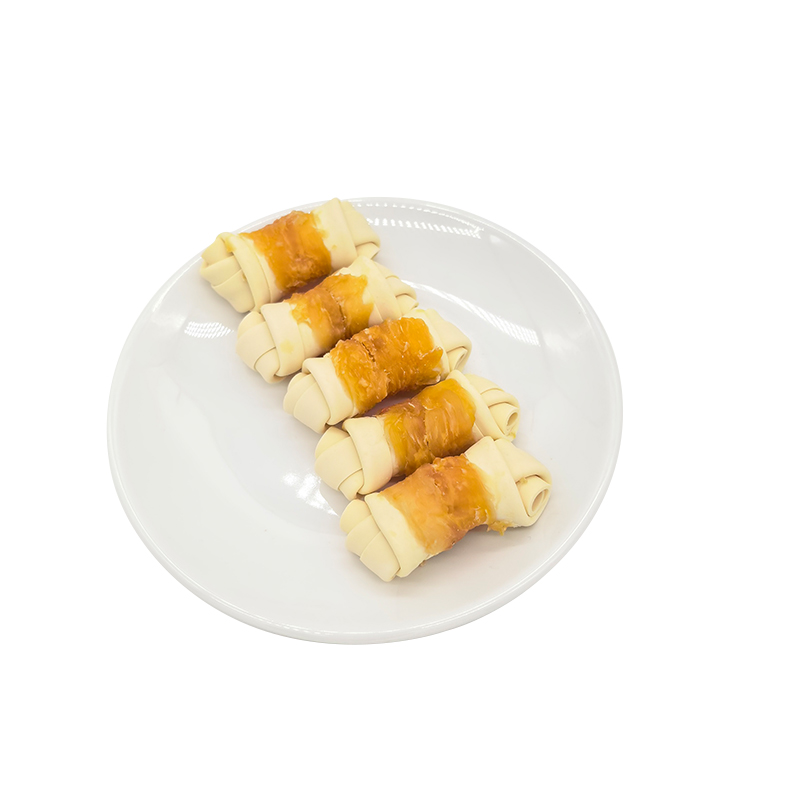
Meat Wrapped Dog Treats
Our KN001 2.5-3-inch chicken coated starch bone chewable tablets are designed specifically for dogs,...View More -
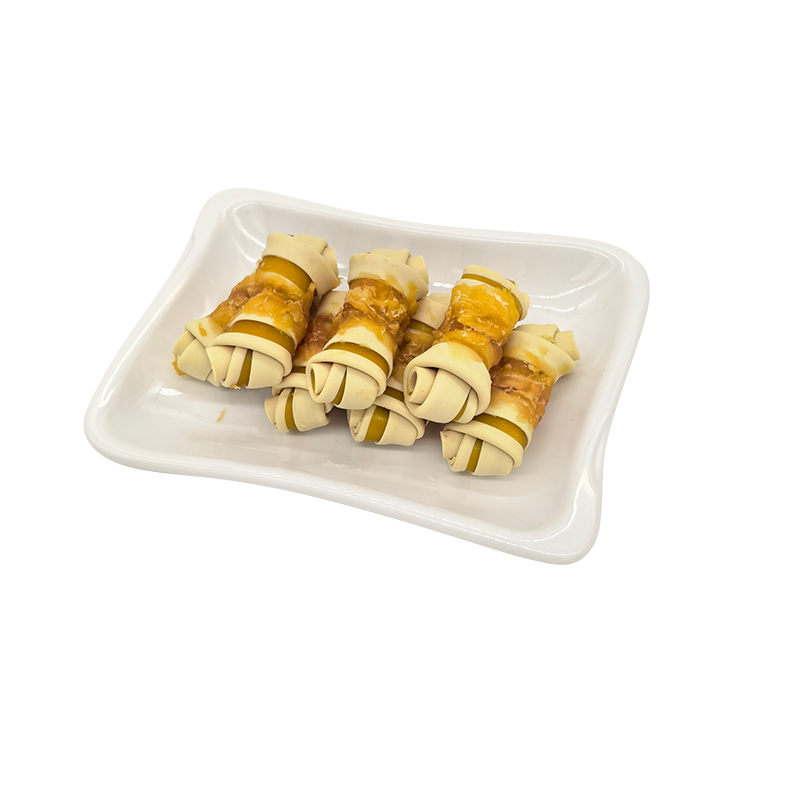
Meat Wrapped Dog Treats
The KN003 organic protein dog chew treats are crafted with a wholesome blend of corn starch, sweet p...View More -
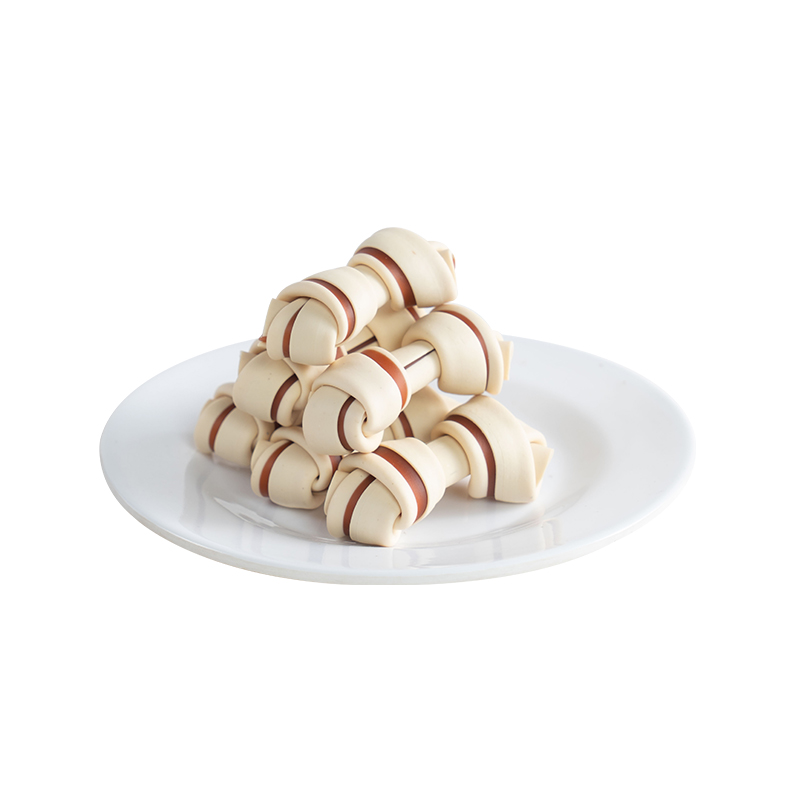
Knotted Bone Series
The KN004 Chewing Gum Grinding Teeth Cleaning Teeth Dog Snacks is a starch-based chew treat specific...View More -
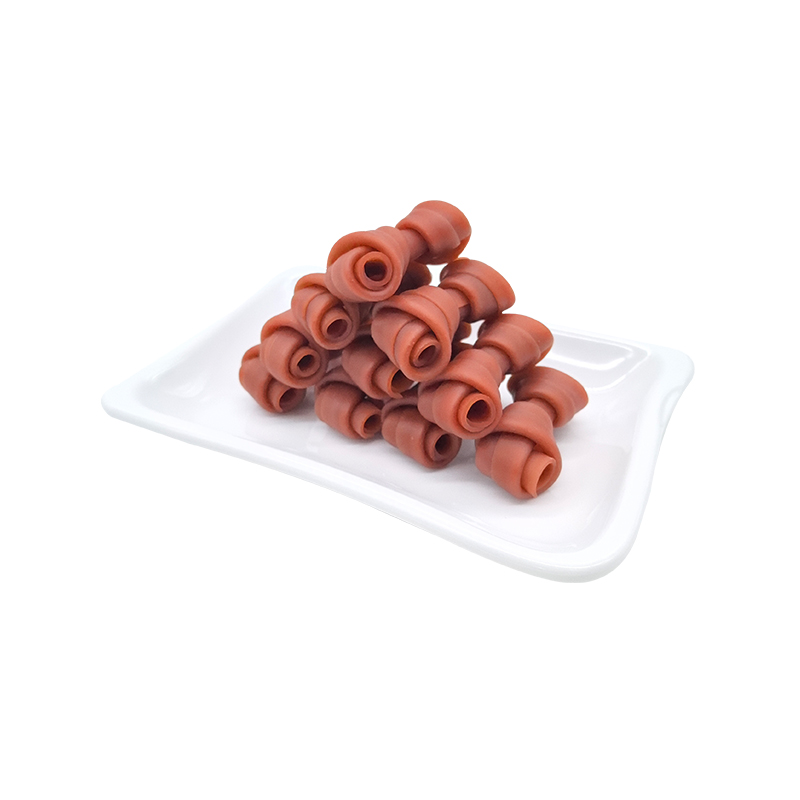
Knotted Bone Series
KN005 Dog single Color Bone Chew Snacks Safe and Healthy Pet Food is a healthy pet food made primari...View More -
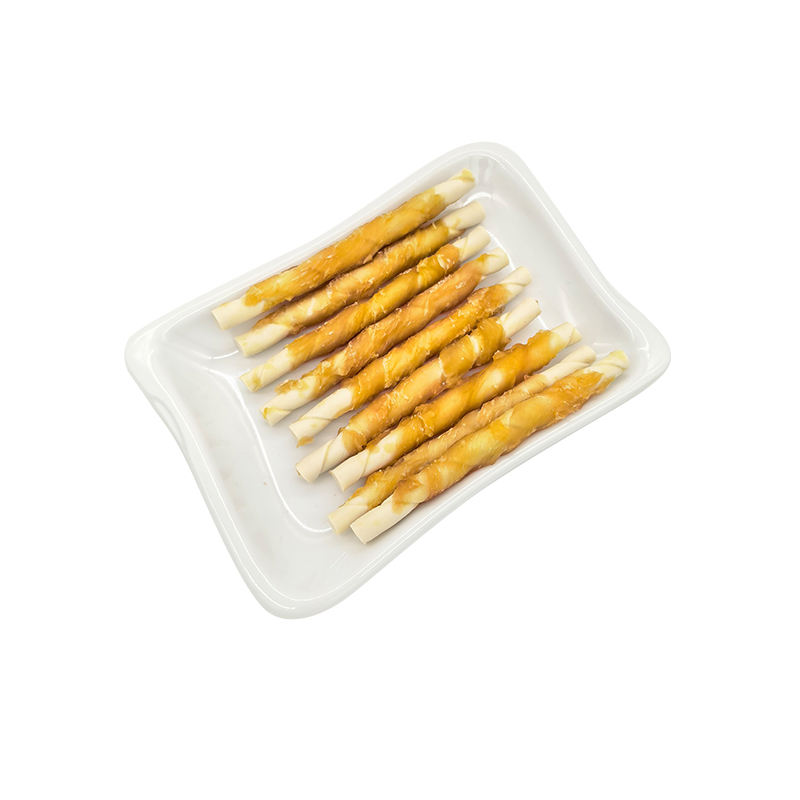
Meat Wrapped Dog Treats
ST001 Milk Flavored 12cm Nutritious Meat-Wrapped Pet Chicken Rolls Stick combine premium chicken wit...View More -
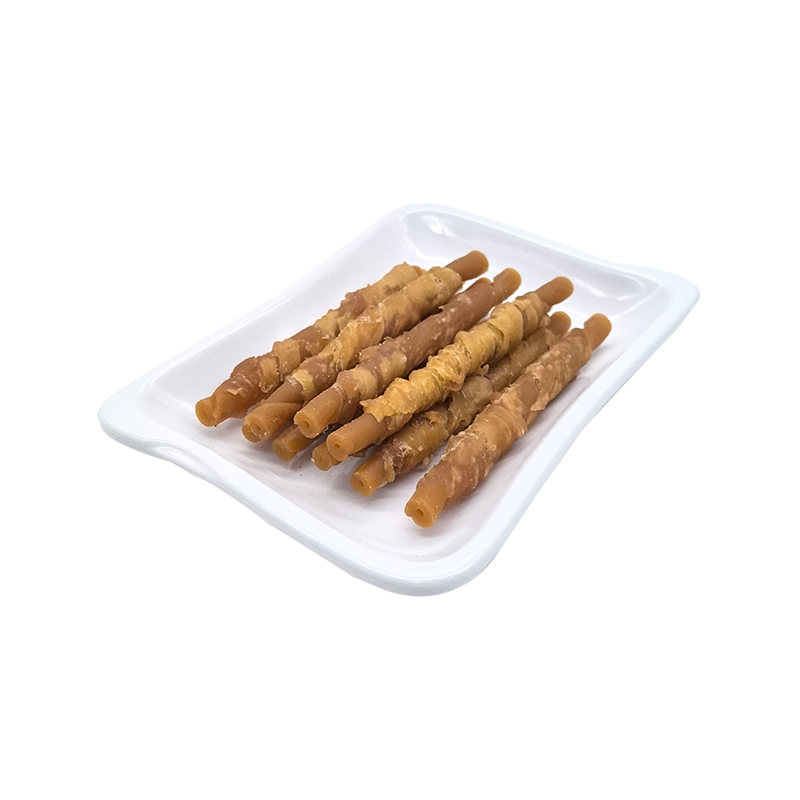
Meat Wrapped Dog Treats
ST002 Chicken Flavor Organic Dog Dental Chew Stick is a healthy and tasty snack designed for dogs’ d...View More


TIME TO FEED YOUR PETS
-
Quick Links
-

The company integrates production and R&D functions, and its core business focuses on the R&D and production of pet snacks and pet chews.
-
Contact Us
Phone/WhatsApp:
+86 18067755187
+86-18657866096 E-mail:
[email protected]
[email protected] Add: No. 358-1, Longqing Road, Nanmingshan Street, Liandu District, Lishui, Zhejiang, China
