Welcome to Lishui Tengyu Pet Food Co., Ltd.
[email protected]

 English
 Español
 Deutsch


Industry News

Industry News
Is It OK for Dogs to Chew on Sticks? Risks and Alternatives
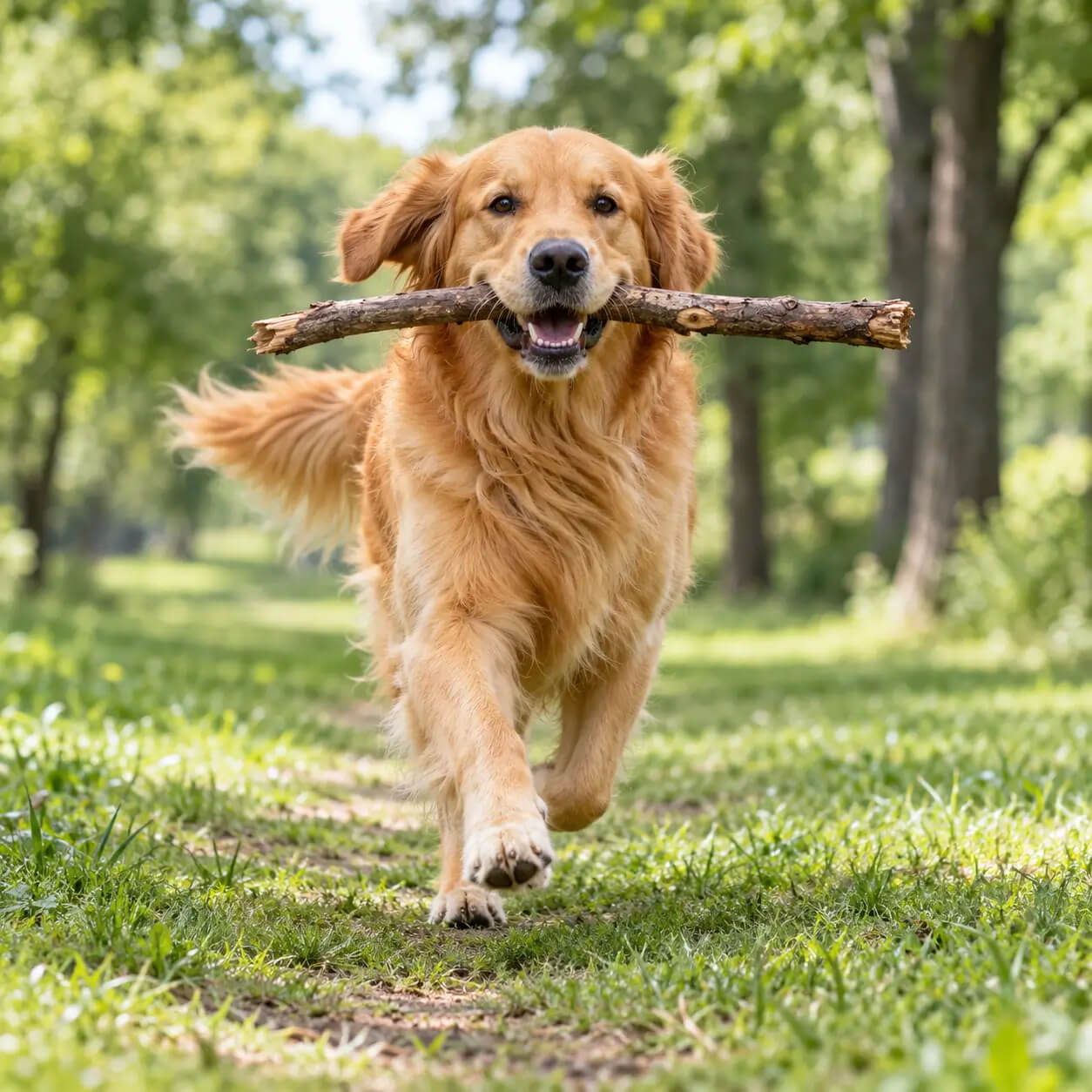
It is best not to let your dog use ordinary tree branches as chew toys. A stick can split, become wedged between teeth, or leave sharp fragments in the mouth—even if your dog does not swallow it.
That does not mean every dog that picks up a twig has an emergency. What matters is whether your dog is carrying it, breaking it apart, swallowing pieces, or running with it. Understanding the behavior helps you decide when to redirect your dog and when to call a vet.
Why Does My Dog Prefer Sticks to Their Toys?
A stick is something new to investigate. It has outdoor smells, an uneven surface, and a texture that changes as it is chewed. Dogs explore with their mouths, so finding a branch interesting is not unusual.
The circumstances can tell you more than the stick itself. A puppy that chews many different objects may be teething. A dog that starts shredding branches whenever you stop at a park may need an activity. One that grabs a stick and waits for you to approach may have learned that it starts a chase.
Chewing can also be a way of coping with frustration or anxiety. Look at the wider pattern rather than assuming that every stick-chewing dog is bored.
Chewing and Eating Wood Are Different Behaviors
Occasionally investigating a branch is different from repeatedly seeking out and swallowing wood. Persistent eating of non-food objects may be associated with pica and should be discussed with a veterinarian. It does not automatically mean your dog is hungry or missing a nutrient.
Is Chewing a Stick Safe If My Dog Does Not Swallow It?
Not swallowing the wood avoids one risk, but it does not protect the mouth. A short piece can become trapped across the roof of the mouth between the upper teeth. Splinters can also penetrate the gums, tongue, or deeper tissues.
Running and catching introduce another mechanism of injury. If a stick catches against the ground, the dog's momentum can drive it into the mouth or throat. This is why replacing thrown branches with a purpose-made fetch toy matters, even for dogs that never eat wood.
A Wound Can Look Smaller Than the Injury Beneath It
Wood may break off beneath the surface. The visible wound can begin healing while a fragment remains inside, potentially causing infection or swelling later. A stick falling out, or bleeding stopping, does not rule out a deeper puncture.
My Dog Has Already Chewed a Stick. What Should I Do?
Stop further access to the branch and note what happened. Was the dog quietly chewing, swallowing fragments, or chasing the stick when something went wrong? If pieces are missing, photograph the remaining branch so you can describe their likely size and shape.
Difficulty breathing requires emergency veterinary care.
Mouth bleeding, excessive drooling, repeated gagging, difficulty swallowing, or obvious pain need prompt assessment. Arrange a same-day examination if you suspect the stick punctured the mouth or throat.
If your dog swallowed wood, contact your vet for advice rather than waiting for vomiting. The risk depends on the fragment's size, shape, location, and the dog involved; symptoms may not appear immediately.
Do not induce vomiting unless a veterinarian directs you to, and do not pull on wood embedded in tissue. Keep your dog calm while arranging care. Later swelling around the jaw or neck, reduced appetite, or persistent discomfort should also be reported, along with the earlier stick incident.
How Can I Stop My Dog Chewing Sticks Without Starting a Chase?
Practice Releasing Objects Before You Need It Outdoors
Begin in a quiet room with a toy your dog is comfortable giving up. Offer a small reward and, when your dog releases the toy, mark the moment with a consistent word such as “yes,” then give the reward. Once the exchange is predictable, introduce your “drop it” cue just before the release.
Keep sessions short. Gradually practice in different places before expecting the same response around exciting outdoor objects. Teaching “leave it” separately can help you redirect your dog before they pick up a branch.
Offer Something to Do When You Stop Walking
If branch shredding usually begins while you sit on a bench or chat, plan for that pause. Bring an appropriate toy, use a few short training exercises, or allow some supervised sniffing before settling down.
Try to interrupt the pattern before chewing starts. Reward your dog for checking in with you or moving past a branch, rather than relying only on taking sticks away afterward.
Avoid chasing your dog or repeatedly grabbing at their mouth. If they stiffen, growl, or guard found objects, seek help from a qualified behavior professional rather than forcing an exchange.
What Can I Give My Dog Instead of a Stick?
Match the replacement to what your dog enjoys. A dog that loves retrieving needs an appropriate fetch toy. A dog that wants to settle and gnaw may prefer a suitable chew toy or edible chew. An edible treat should not be used as a throwing stick.
Choose for the Dog's Chewing Style
Watch how your dog handles a chew. Do they work on it gradually, bite off large sections, or try to swallow it almost immediately? A product that suits a steady chewer may be a poor match for a dog that gulps.
Harder does not automatically mean better. Very hard materials can damage teeth. Size matters too: avoid items your dog can swallow whole, and remove edible chews once the remaining piece becomes small enough to gulp.
Check the Ingredients and Feeding Guidance
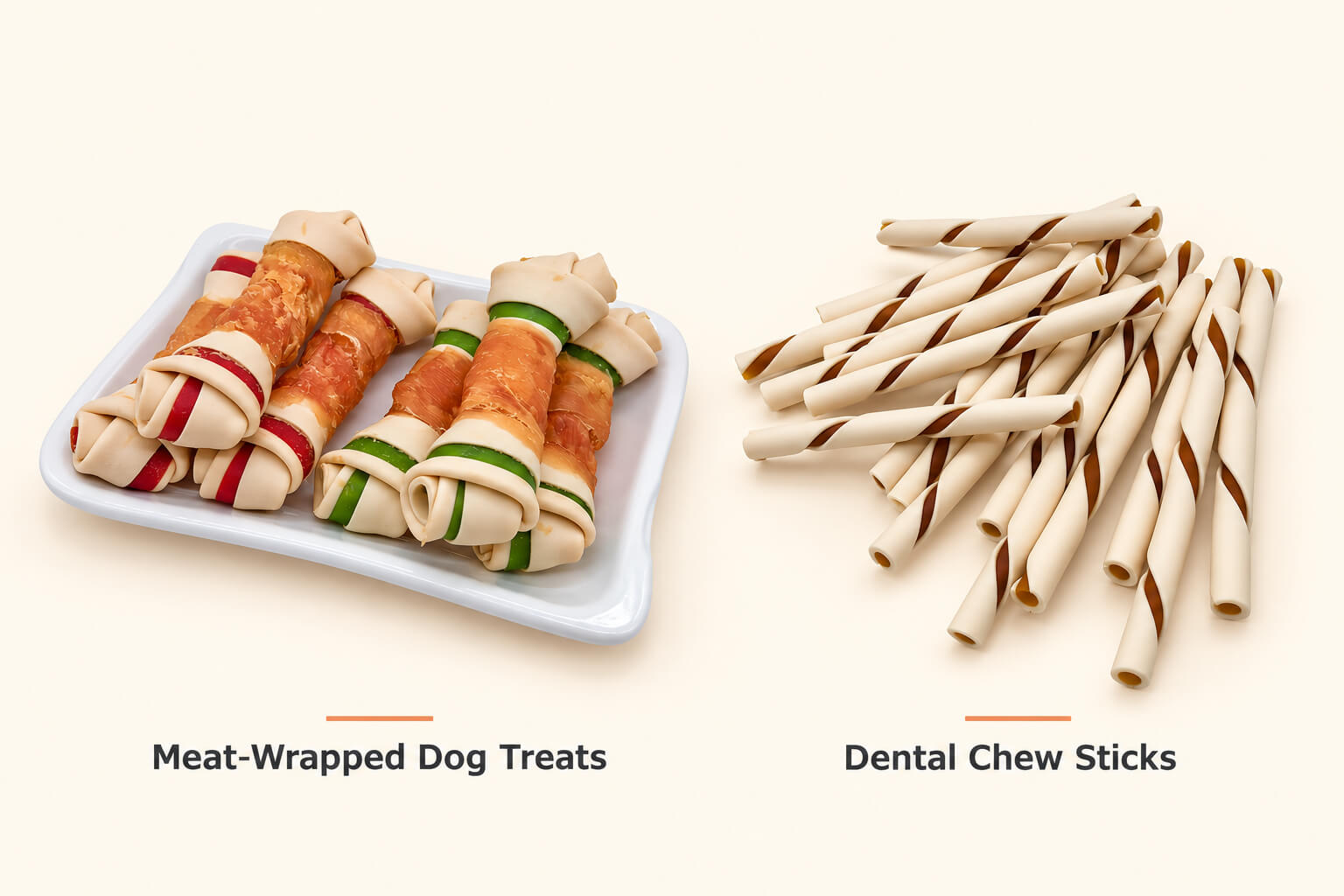
Edible choices include dental chew sticks and meat-wrapped dog treats. Check the complete ingredient list, suitable age, and feeding instructions. A meat coating does not tell you what the inner core contains, and a stick shape does not establish how firm the finished product will be.
Introduce a new chew under supervision and watch how it breaks down. Include treat calories in your dog's daily food allowance. Dogs with dental problems, dietary restrictions, or a history of swallowing large pieces may need individual veterinary guidance.
Dental chews can support an oral care routine, but they do not replace tooth brushing or veterinary dental treatment.
NEXT:Two-Color Puffed Twisted Dog Chew Sticks Bring Texture Contrast
-
Meat Wrapped Dog Treats
Our KN001 2.5-3-inch chicken coated starch bone chewable tablets are designed specifically for dogs,...View More -
Meat Wrapped Dog Treats
The KN003 organic protein dog chew treats are crafted with a wholesome blend of corn starch, sweet p...View More -
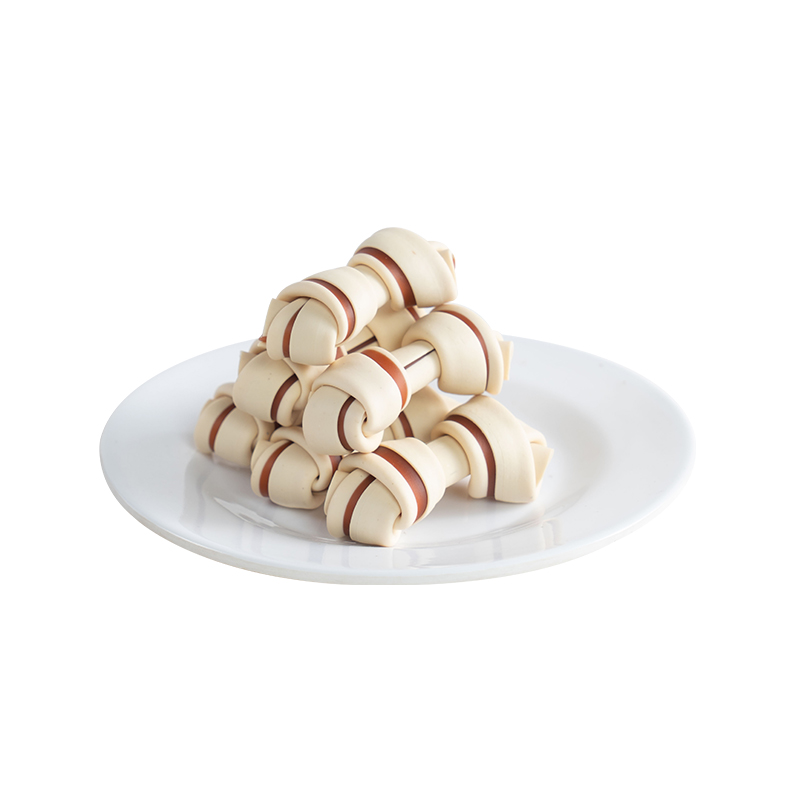
Knotted Bone Series
The KN004 Chewing Gum Grinding Teeth Cleaning Teeth Dog Snacks is a starch-based chew treat specific...View More -
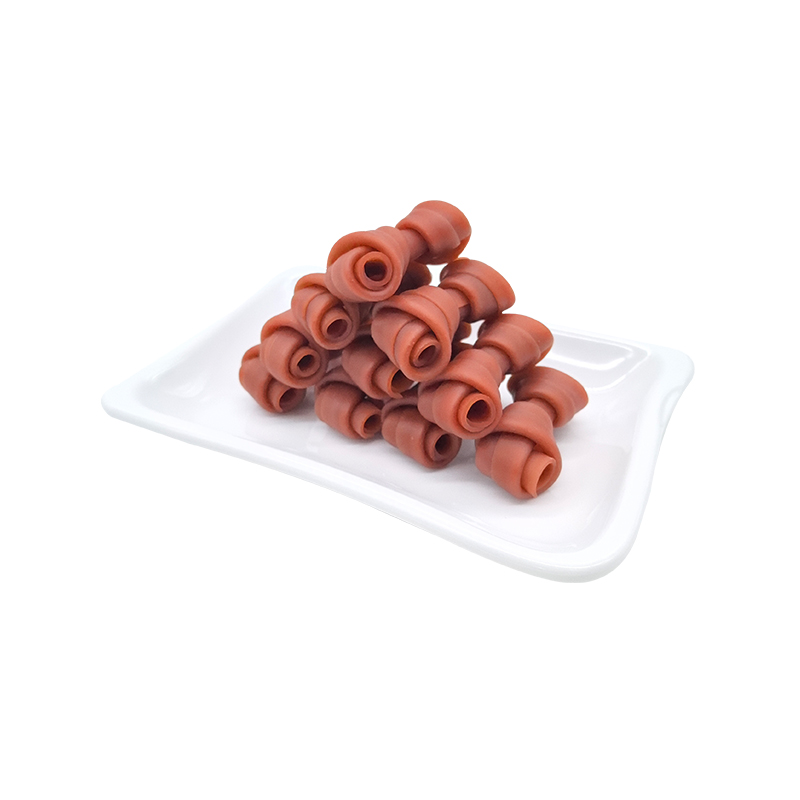
Knotted Bone Series
KN005 Dog single Color Bone Chew Snacks Safe and Healthy Pet Food is a healthy pet food made primari...View More -
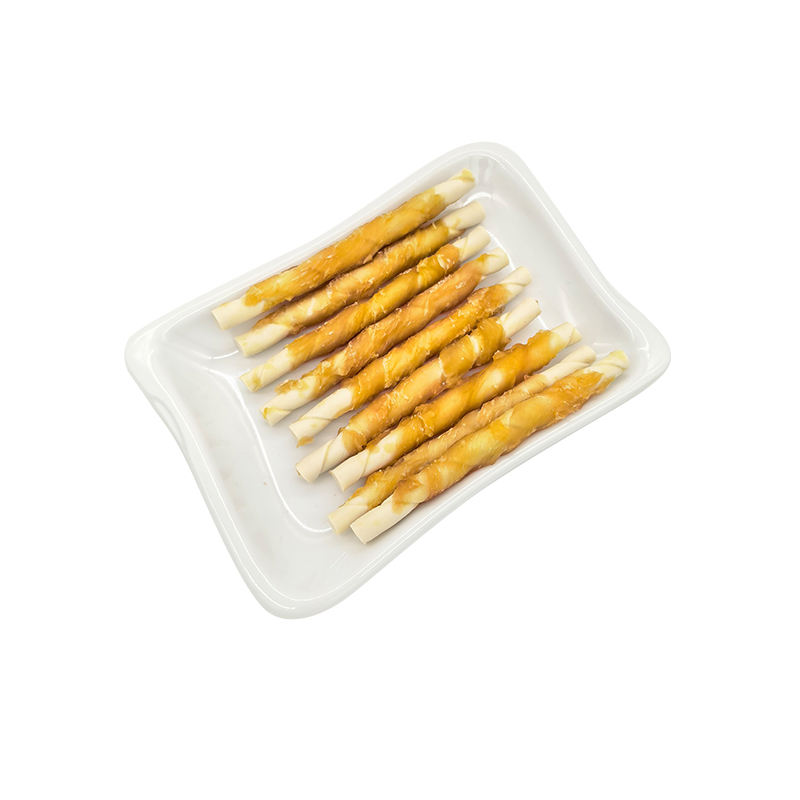
Meat Wrapped Dog Treats
ST001 Milk Flavored 12cm Nutritious Meat-Wrapped Pet Chicken Rolls Stick combine premium chicken wit...View More -
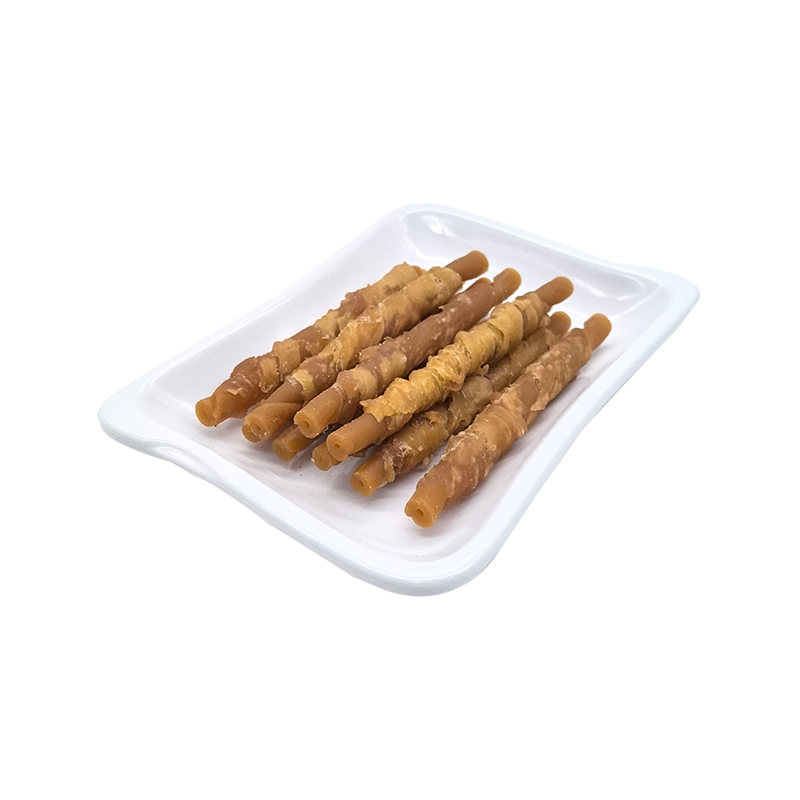
Meat Wrapped Dog Treats
ST002 Chicken Flavor Organic Dog Dental Chew Stick is a healthy and tasty snack designed for dogs’ d...View More
TIME TO FEED YOUR PETS
-
Quick Links
-

The company integrates production and R&D functions, and its core business focuses on the R&D and production of pet snacks and pet chews.
-
Contact Us
Phone/WhatsApp:
+86 18067755187
+86-18657866096 E-mail:
[email protected]
[email protected] Add: No. 358-1, Longqing Road, Nanmingshan Street, Liandu District, Lishui, Zhejiang, China
