Welcome to Lishui Tengyu Pet Food Co., Ltd.
[email protected]

 English
 Español
 Deutsch


Industry News

Industry News
How Many Chew Sticks Can a Dog Have a Day?
When your dog looks up at you asking for another treat, it can be difficult to decide whether one more is too much. How many dog chew sticks can you give each day without affecting meals or adding unnecessary calories?
If your dog chew stick’s feeding guide allows one to two sticks per day, stay within that limit—and check that they fit your dog’s daily treat allowance. Some products recommend only one daily, while others have different feeding schedules. Choose the appropriate size for your dog’s weight and age.
All treats combined should provide no more than 10% of your dog’s daily calories. This includes dog chew sticks, chicken strips, biscuits, training treats, and table scraps.
What Happens If You Give Too Many Dog Chew Sticks?
Reduced Appetite for Regular Food
A dog that eats several treats throughout the day may be less hungry at mealtimes. If you repeatedly offer a preferred treat after your dog refuses regular food, you may also reinforce selective eating.
Too many treats can reduce interest in meals, and continually offering more appealing alternatives can encourage picky eating habits. However, a sudden or persistent loss of appetite should not automatically be dismissed as pickiness.
Excess Calories and Weight Gain
A dog chew stick adds calories even when it is given for chewing or dental care. If your dog continues eating its usual meals while receiving extra treats, total calorie intake can exceed its needs.
Over time, this can contribute to weight gain. Replacing a substantial portion of complete and balanced food with treats can also disrupt nutritional balance.
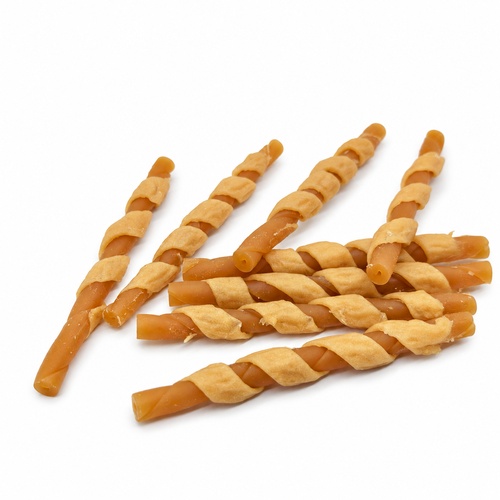
Common Dog Treats: An Illustrative Calorie Comparison
Treat size alone does not tell you how many calories it contains. Ingredients, weight, and formulation all affect the calorie content.
Suppose the treats you use contain the following amounts:
| Treat and Portion | Hypothetical Calories |
|---|---|
| Freeze-dried chicken, 5 g | 20 kcal |
| Chicken strip, 1 piece | 35 kcal |
| Cheese stick, 1 piece | 40 kcal |
| Dog chew stick, 1 piece | 50 kcal |
| Dog biscuit, 1 piece | 30 kcal |
These figures are illustrative assumptions, not measured values for Tengyu products or standard values for these treat categories. Check the specific product’s packaging or contact its manufacturer for actual calorie information.
If your dog’s daily treat allowance is 60 kcal, one 50-kcal dog chew stick uses most of that allowance. Only 10 kcal remains—less than one whole chicken strip or biscuit in this example.
Giving a different type of treat does not create a separate allowance. Every treat counts toward the same daily total.
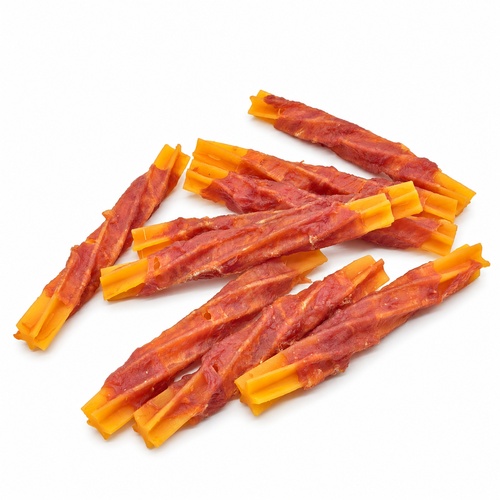
The 10% Rule for Dog Treats
At least 90% of your dog’s daily calories should come from complete and balanced food, with no more than 10% coming from treats and other extras. These percentages refer to calories, not food weight or bowl volume.
For example, suppose your dog’s assessed daily calorie requirement is 600 kcal:
- Complete and balanced food should provide at least 540 kcal.
- Treats should provide no more than 60 kcal.
Using the hypothetical values above:
| Daily Treat Combination | Total Treat Calories | Within the 60-kcal Allowance? |
|---|---|---|
| One dog chew stick | 50 kcal | Yes |
| One chicken strip + one biscuit | 65 kcal | No |
| Two dog chew sticks | 100 kcal | No |
In this example, one dog chew stick fits the calorie allowance, but two do not, even if the packaging permits up to two.
Both conditions matter: the amount must follow the product’s feeding directions and fit the dog’s calorie allowance. The 10% limit is a ceiling, not a target you need to reach every day.
Treats vs. Regular Meals: Why the Ratio Matters
Consider two feeding patterns for a dog that needs 600 kcal per day:
| Calorie Distribution | Complete and Balanced Food | Treats |
|---|---|---|
| 90% food / 10% treats | 540 kcal | 60 kcal |
| 70% food / 30% treats | 420 kcal | 180 kcal |
Both provide 600 kcal, but they do not provide the same nutritional balance.
Complete and balanced food supplies the nutrients your dog needs in appropriate proportions. Most treats are intended for supplemental feeding. When treats replace too much regular food, the overall diet may become unbalanced.
Alternatively, if treats are added without adjusting the rest of the diet, total calories may become excessive. Simply reducing meals substantially to make room for more dog chew sticks is not a suitable long-term solution.
Conclusion
Follow the feeding guide for the specific product, then check the calories from all treats given that day. A product labeled for one stick daily should not be increased to two because your dog finishes it quickly or asks for more.
Choose a dog chew stick suited to your dog’s size and age, supervise chewing, and remove pieces that could be swallowed whole.
The appropriate daily amount depends on the product and your dog. Keep regular food as the main source of nutrition, count every treat, and stay within both the package instructions and the daily treat allowance.
NEXT:Rawhide vs. Rawhide-Free Dog Chews: Pros, Cons & Differences
-
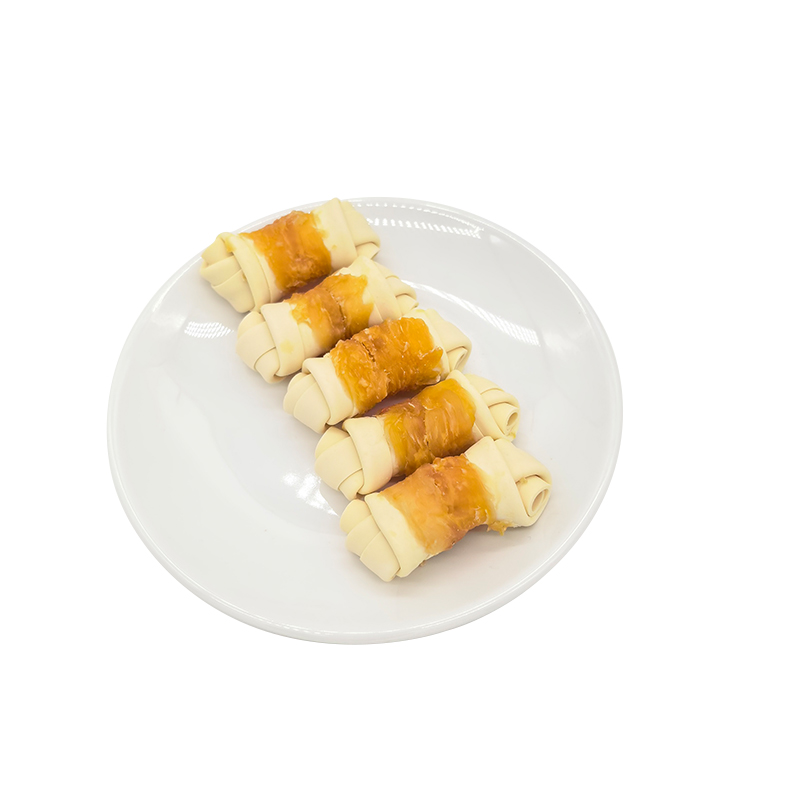
Meat Wrapped Dog Treats
Our KN001 2.5-3-inch chicken coated starch bone chewable tablets are designed specifically for dogs,...View More -
Meat Wrapped Dog Treats
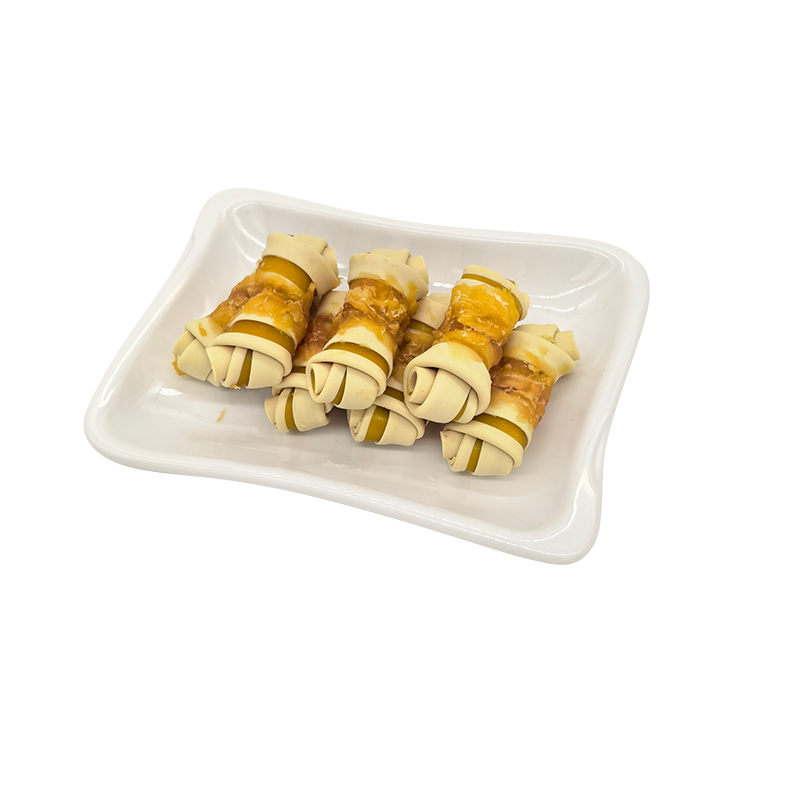
The KN003 organic protein dog chew treats are crafted with a wholesome blend of corn starch, sweet p...View More -
Knotted Bone Series
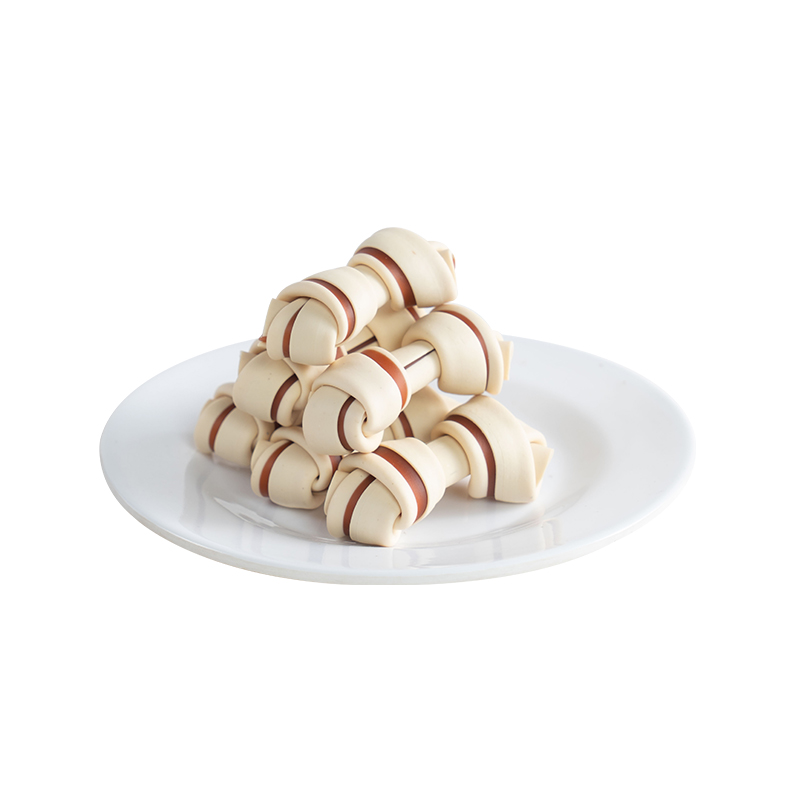
The KN004 Chewing Gum Grinding Teeth Cleaning Teeth Dog Snacks is a starch-based chew treat specific...View More -
Knotted Bone Series
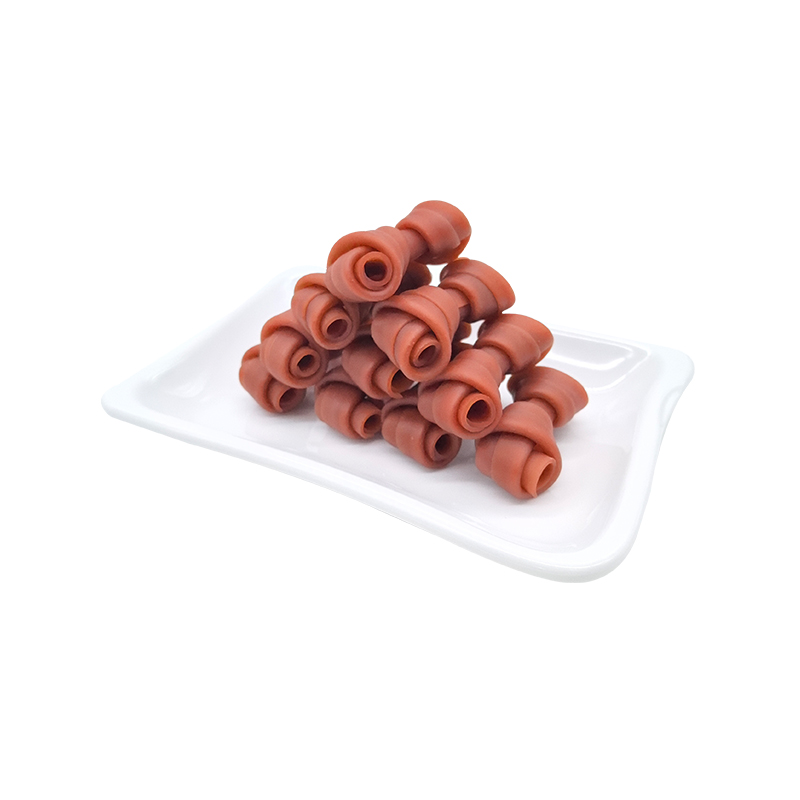
KN005 Dog single Color Bone Chew Snacks Safe and Healthy Pet Food is a healthy pet food made primari...View More -
Meat Wrapped Dog Treats
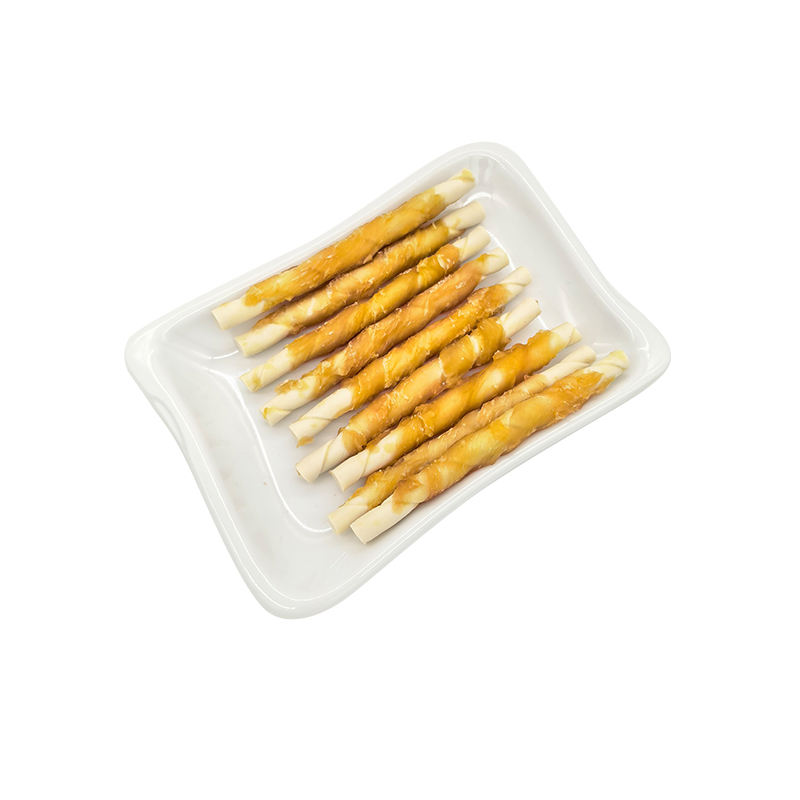
ST001 Milk Flavored 12cm Nutritious Meat-Wrapped Pet Chicken Rolls Stick combine premium chicken wit...View More -
Meat Wrapped Dog Treats
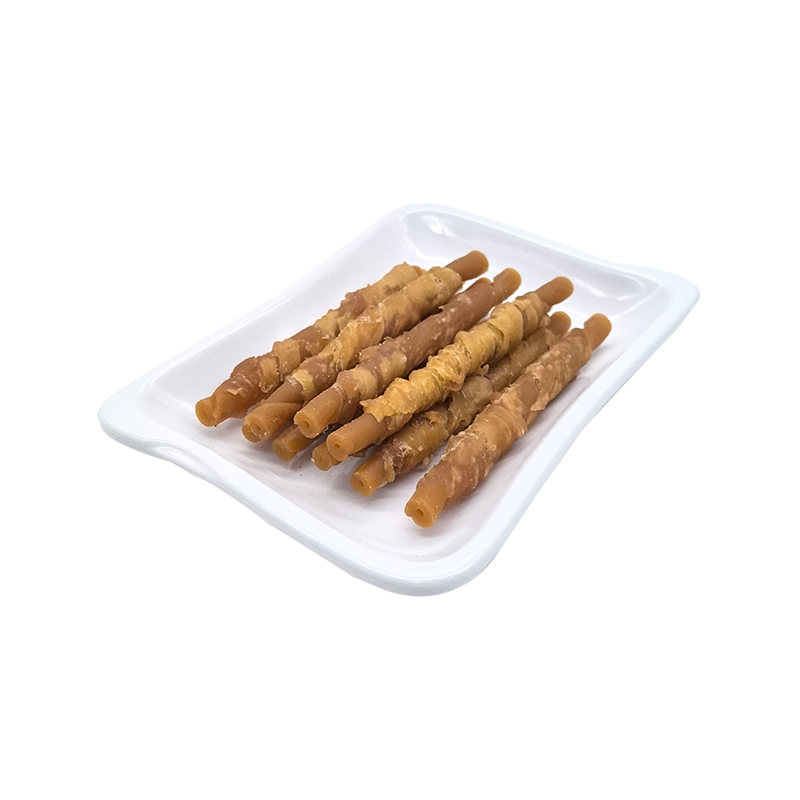
ST002 Chicken Flavor Organic Dog Dental Chew Stick is a healthy and tasty snack designed for dogs’ d...View More


TIME TO FEED YOUR PETS
-
Quick Links
-

The company integrates production and R&D functions, and its core business focuses on the R&D and production of pet snacks and pet chews.
-
Contact Us
Phone/WhatsApp:
+86 18067755187
+86-18657866096 E-mail:
[email protected]
[email protected] Add: No. 358-1, Longqing Road, Nanmingshan Street, Liandu District, Lishui, Zhejiang, China
