
 English
 Español
 Deutsch



Two common types of dog chews are rawhide dog chews and rawhide-free dog chews. With so many options available, dog owners, pet retailers, and wholesale buyers may wonder which type to choose. This guide compares rawhide vs. rawhide-free dog chews, covering their ingredients, durability, nutritional characteristics, advantages, and potential drawbacks to help you make an informed decision.
What Are Rawhide Dog Chews?
Rawhide dog chews are traditionally made from the inner layer of animal hides, usually cow or buffalo hides. The material undergoes cleaning, processing, shaping, and drying to create durable chew treats for dogs.
Rawhide consists primarily of collagen and other structural proteins. Its dense, fibrous structure gives it a tough texture that gradually softens as dogs chew and expose it to saliva.
Common rawhide products include knotted bones, rolled sticks, pressed bones, and meat-wrapped chews. Different shapes, sizes, and processing methods offer a variety of chewing experiences.
Pros and Cons of Rawhide Dog Chews
Advantages of Rawhide Dog Chews
1. Long-Lasting Chewing Satisfaction
Durability is one of the greatest advantages of traditional rawhide chews. Their tough, fibrous texture allows many dogs to enjoy longer chewing sessions than they would with ordinary soft treats.
Chewing is a natural canine behavior. A suitable long-lasting chew can keep dogs occupied, help relieve boredom, and provide an enjoyable outlet for their natural chewing instincts.
2. Typically Rich in Protein
Animal rawhide is primarily composed of collagen and other structural proteins, so traditional rawhide chews are typically rich in protein.
Some products also incorporate chicken, duck, or other meats to enhance flavor and diversify protein sources. However, protein content alone does not determine overall nutritional quality, which should be evaluated through the product's nutritional analysis.
3. Supports Dental Hygiene Through Chewing
The chewing action creates mechanical friction against the teeth, which may help remove some food debris and plaque. Rawhide chews can therefore complement a dog's daily dental care routine, although they do not replace regular toothbrushing or professional veterinary dental care.
4. Affordable and Widely Available
Rawhide chews have been part of the pet treat market for decades. Available in knotted bones, rolls, pressed shapes, and meat-wrapped varieties, they offer established product formats at generally affordable prices compared with some specialty natural chews.
Disadvantages of Rawhide Dog Chews
1. Slower Digestion and Potential Blockage Risks
The same tough structure that makes rawhide durable can also make large pieces difficult to digest. Dogs that swallow chunks without chewing them thoroughly may experience choking, digestive discomfort, or intestinal blockages.
These risks are particularly important for aggressive chewers that tend to gulp down large pieces.
2. Concerns About Processing and Additives
Traditional rawhide production involves several processing stages. Depending on the manufacturer, some methods may involve chemical processing agents, while certain products contain added colors, flavors, or preservatives.
For this reason, ingredient transparency, responsible processing, and reliable quality control are important when selecting rawhide dog treats.
3. Animal Sourcing and Environmental Concerns
As an animal-derived material, rawhide is connected to the leather and animal hide supply chain. Some consumers consider animal welfare, sourcing transparency, and the environmental impact of processing when making purchasing decisions.
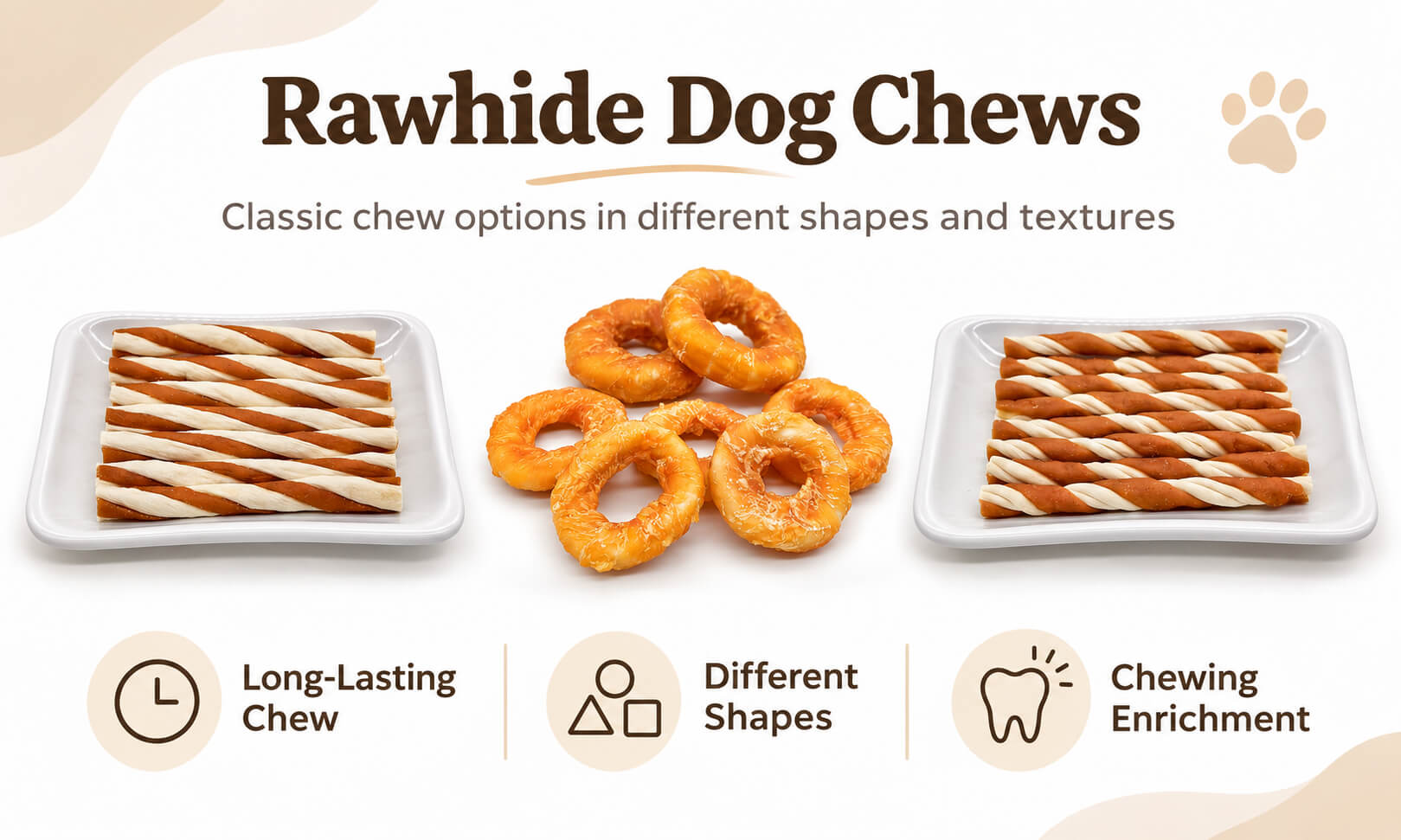
Tengyu's Product Innovation: Building on traditional rawhide materials, Lishui Tengyu Pet Food Co., Ltd. has developed composite rawhide and collagen dog chews using specialized formulations and processing techniques. These products combine rawhide-derived materials with selected ingredients to offer protein-rich formulations, satisfying textures, and appealing flavors for healthy adult dogs that enjoy chewing. Explore our composite rawhide and collagen dog chews.
What Are Rawhide-Free Dog Chews?
Rawhide-free dog chews are chew treats made without traditional animal rawhide. They are often marketed as rawhide alternatives for dogs and can be produced using starches, chicken, duck, fish, and other animal- or plant-based ingredients.
Unlike traditional rawhide products, these chews can be formulated and processed into a wide range of textures, shapes, and flavors. Common options include starch-based knotted bones, dental chew sticks, twisted rolls, and meat-wrapped treats.
Rawhide-free chews are more than simple substitutes for rawhide. Their flexible ingredient combinations allow manufacturers to develop products with different chewing characteristics, nutritional profiles, and digestibility goals.
Pros and Cons of Rawhide-Free Dog Chews
Advantages of Rawhide-Free Dog Chews
1. Formulated for Easier Digestion
One reason dog owners explore rawhide-free chews is their potential for improved digestibility. Many rawhide-free products use processed starches, meat, and other digestible ingredients instead of the tough fibrous structure of traditional rawhide.
This makes specially formulated rawhide-free chews an appealing option for owners who prioritize digestive comfort. Actual digestibility still depends on the ingredients and manufacturing process used.
2. Greater Ingredient and Nutritional Variety
Without relying on traditional animal hide, manufacturers can choose from a wide range of ingredients, including chicken, duck, beef, fish, starches, and selected plant-based materials.
This flexibility supports different protein sources, nutritional profiles, and limited-ingredient formulations. It also allows brands to develop products for specific dietary preferences while providing consumers with greater ingredient transparency.
3. Diverse Flavors, Shapes, and Textures
Rawhide-free does not necessarily mean soft or short-lasting. By adjusting formulations and production techniques, manufacturers can create chews with different levels of firmness and durability.
Knotted bones, twisted sticks, dental chews, and meat-wrapped rolls can be offered in flavors such as chicken, beef, duck, peanut, and mint. These options help brands serve different dog sizes, chewing preferences, and consumer tastes.
4. More Options for Health-Conscious Pet Owners
As pet owners pay closer attention to ingredients, additives, and nutritional composition, rawhide-free products provide opportunities for simpler formulations and carefully selected ingredients.
Depending on the recipe, manufacturers can develop chews with limited ingredients, specific protein sources, or fewer unnecessary additives. Some brands also emphasize responsible sourcing and sustainability as part of their product positioning.
Disadvantages of Rawhide-Free Dog Chews
1. Some Products Are Less Durable
Although rawhide-free chews can be made with durable textures, certain starch-based or softer meat treats may be consumed much faster than traditional rawhide.
For powerful chewers, product hardness, structure, and chewing duration are important factors when selecting a suitable treat.
2. Calories and Ingredients Vary
Rawhide-free chews come in many formulations, and their calorie levels and nutritional profiles can differ considerably.
Some products contain higher-fat ingredients, while others include chicken, beef, wheat, or other potential allergens. Rawhide-free does not automatically mean low-calorie, grain-free, or suitable for every dog with food sensitivities.
3. Hardness and Swallowing Risks Still Matter
Some rawhide-free chews may be too hard for dogs with sensitive teeth, while others can break into pieces that may be swallowed whole.
Choosing an appropriate size and texture remains essential, particularly for puppies, senior dogs, and dogs with dental concerns.
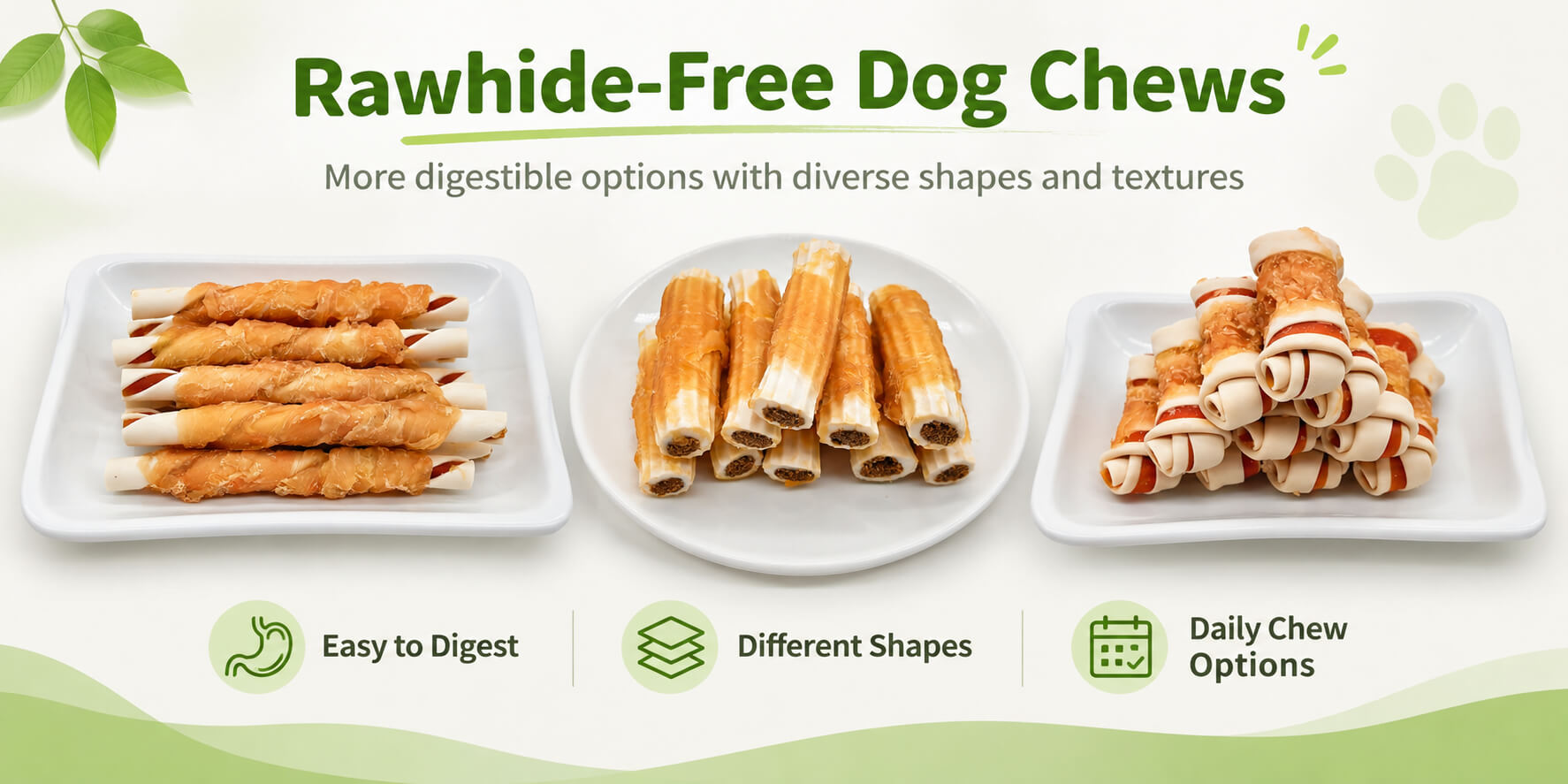
A Growing Direction in Dog Treat Innovation: Rawhide-free chews have become an important alternative to traditional rawhide as consumers seek more ingredient choices and digestibility-focused formulations. Rawhide-free products are a key focus at Tengyu, where we develop starch-based knotted bones, twisted sticks, and dental chews in a variety of flavors and sizes. We also offer OEM/ODM and private label customization for pet treat brands, importers, and distributors. Discover our rawhide-free knotted dog chews.
Rawhide vs. Rawhide-Free Dog Chews: Which Should You Choose?
The key difference between rawhide and rawhide-free dog chews comes down to chewing durability, ingredient composition, and digestibility-focused formulation.
For dogs that enjoy long chewing sessions: Traditional rawhide chews are worth considering. Their firm, fibrous structure provides lasting chewing satisfaction, making them an option for healthy adult dogs that chew thoroughly rather than swallowing large pieces.
For owners who prioritize digestion and ingredient choices: Rawhide-free chews formulated for easier digestion offer an attractive alternative. Their diverse ingredients, flavors, and textures provide more options for specific preferences and dietary needs.
For puppies, senior dogs, or dogs with special dietary needs: Appropriate size, texture, ingredients, and dental condition should take priority over the rawhide or rawhide-free label alone.
Whichever type you choose, supervise chewing sessions and remove pieces small enough to be swallowed whole.
For pet treat brands and wholesale buyers, both categories offer distinct market opportunities. Traditional rawhide is well suited to durability-focused products, while rawhide-free chews create more opportunities for ingredient, flavor, and formulation innovation. Offering both can help meet a wider range of customer preferences.
In short, choose rawhide chews for long-lasting chewing satisfaction and consider specially formulated rawhide-free chews when digestibility and ingredient variety are the priorities. The best choice is the one that matches your dog's needs and chewing habits.