Welcome to Lishui Tengyu Pet Food Co., Ltd.
[email protected]

 English
 Español
 Deutsch


Industry News

Industry News
Which Standards Matter For Healthy Chicken Jerky For Dogs?
Healthy chicken jerky for dogs is often evaluated long before a buyer opens the package. Importers, distributors, and private-label customers usually pay more attention to production records, ingredient documentation, and inspection reports than to product appearance alone. A piece of jerky may look appealing, but professional purchasing decisions are increasingly based on the information behind the product rather than its colour or shape.
As export markets continue to develop, pet food quality has become a practical topic during supplier communication instead of simply a marketing phrase.
Ingredient Selection Starts Before Production
Different factories may produce products with a similar appearance while using different sourcing standards.
Some buyers now ask where the chicken comes from before discussing flavour or packaging.
Others request information about raw material traceability and inspection procedures.
These questions have become common because the quality of healthy chicken jerky for dogs begins with the ingredients rather than the drying equipment.
For many purchasing teams, supplier transparency is becoming just as valuable as production capacity.
Labels Tell Only Part Of The Story
Packaging provides useful information, but experienced buyers rarely stop there.
A specification sheet may list protein content.
Certificates may describe inspection standards.
Laboratory reports may include moisture or microbiological data.
Each document provides another piece of the overall picture.
When comparing healthy chicken jerky for dogs, procurement teams often combine these records instead of depending on a single document.
That approach helps them build a more complete understanding of pet food quality before placing larger orders.
Additive Policies Receive More Attention
Product discussions have gradually changed over recent years.
Instead of asking only about flavour options, many overseas buyers now ask how recipes are formulated.
Questions about unnecessary additives appear more frequently during supplier meetings.
Factories therefore explain ingredient lists in greater detail and describe how recipes are controlled during production.
For manufacturers of healthy chicken jerky for dogs, clear ingredient information has become an important part of business communication rather than something prepared only for product labels.
Protein Values Need Context
Protein content is one of the most recognised numbers in pet food.
However, experienced importers understand that the figure alone does not describe the entire product.
Production methods.
Ingredient consistency.
Moisture control.
Each of these can influence the final nutritional profile.
Because of this, suppliers often discuss protein values together with broader pet food quality information instead of presenting one isolated specification.
Batch Consistency Matters During Long-Term Cooperation
A single production sample may perform well.
Long-term supply is different.
Distributors usually want products that remain consistent across multiple shipments rather than only one successful batch.
This is why quality records are reviewed repeatedly throughout production.
Raw material inspection.
Processing records.
Finished product testing.
These routine activities help maintain more stable healthy chicken jerky for dogs throughout continued manufacturing rather than relying only on final inspection.
Buyers Often Compare More Than Products
During supplier evaluation, products are only one part of the discussion.
Communication speed.
Technical documentation.
Production management.
Quality records.
These areas often influence purchasing decisions alongside the finished product itself.
As a result, healthy chicken jerky for dogs is increasingly assessed as part of an overall manufacturing system instead of an individual snack.
Many experienced buyers believe reliable documentation reflects reliable production.
Quality Is Built Through Daily Control
Consistent quality rarely comes from one inspection or one certificate.
It develops through repeated daily control inside the factory.
Small adjustments are recorded.
Raw materials are checked again.
Production conditions are monitored continuously.
Finished products are reviewed before shipment.
When these routine tasks remain consistent, healthy chicken jerky for dogs is more likely to remain consistent as well.
For many procurement teams, pet food quality is not defined by a single test result. It is reflected in whether the same manufacturing standards can be maintained from one shipment to the next, allowing long-term cooperation to develop on predictable and verifiable production practices.
-
Meat Wrapped Dog Treats
Our KN001 2.5-3-inch chicken coated starch bone chewable tablets are designed specifically for dogs,...View More -
Meat Wrapped Dog Treats
The KN003 organic protein dog chew treats are crafted with a wholesome blend of corn starch, sweet p...View More -
Knotted Bone Series
The KN004 Chewing Gum Grinding Teeth Cleaning Teeth Dog Snacks is a starch-based chew treat specific...View More -
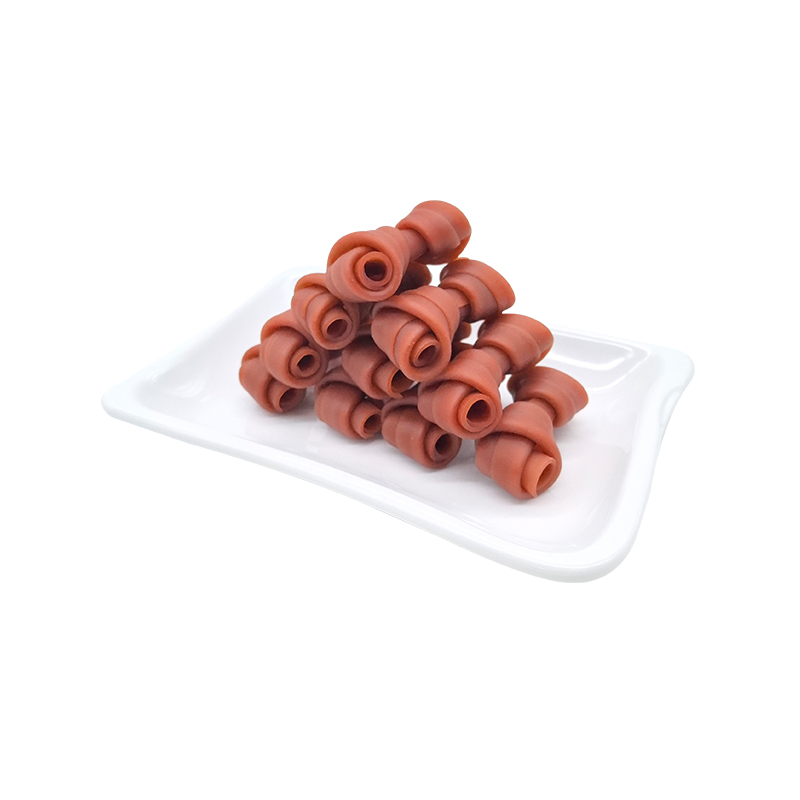
Knotted Bone Series
KN005 Dog single Color Bone Chew Snacks Safe and Healthy Pet Food is a healthy pet food made primari...View More -
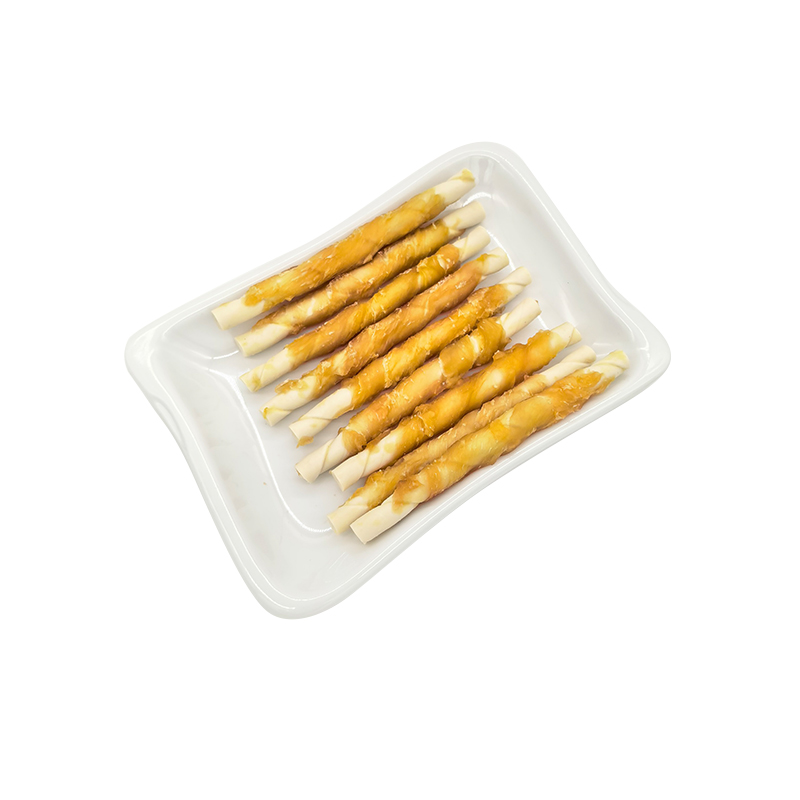
Meat Wrapped Dog Treats
ST001 Milk Flavored 12cm Nutritious Meat-Wrapped Pet Chicken Rolls Stick combine premium chicken wit...View More -
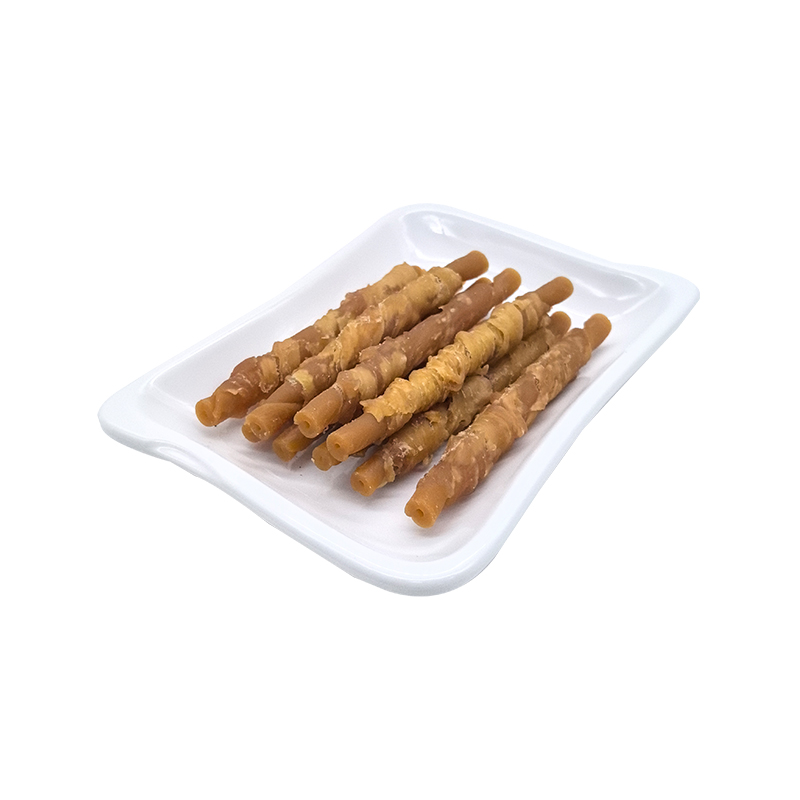
Meat Wrapped Dog Treats
ST002 Chicken Flavor Organic Dog Dental Chew Stick is a healthy and tasty snack designed for dogs’ d...View More


TIME TO FEED YOUR PETS
-
Quick Links
-

The company integrates production and R&D functions, and its core business focuses on the R&D and production of pet snacks and pet chews.
-
Contact Us
Phone/WhatsApp:
+86 18067755187
+86-18657866096 E-mail:
[email protected]
[email protected] Add: No. 358-1, Longqing Road, Nanmingshan Street, Liandu District, Lishui, Zhejiang, China
