Welcome to Lishui Tengyu Pet Food Co., Ltd.
[email protected]

 English
 Español
 Deutsch


Industry News

Industry News
Knotted Bone Dog Treats Depend On What Happens Before The Knot
A starch-based chew core and a meat wrap sound like two ingredients layered together, but getting Knotted Bone Dog Treats to hold their shape through an actual chewing session depends on how well those two components are cooked and bonded before the knot ever gets tied. Two treats can look identical sitting side by side on a shelf and still behave very differently in a dog's mouth, depending on choices made earlier in the production line that never show up on an ingredient panel. Flavor range and knot shape are what a customer notices right away, but the part of the process that actually determines whether a batch of Knotted Bone Dog Treats performs consistently happens well before any of that.
Starch Core Cooking Decides Whether The Chew Crumbles Or Wears Down
Corn starch and sweet potato starch need enough heat and moisture during extrusion to fully gelatinize, turning loose starch granules into a dense, cohesive matrix that wears down gradually under a dog's teeth rather than breaking apart in chunks. An undercooked core looks solid coming off the line but can crumble mid-chew into pieces sized wrong for safe swallowing, particularly on Knotted Bone Dog Treats aimed at smaller dogs with less bite force to work through a properly cooked core anyway. Extrusion time and temperature have to be tracked closely for this reason, because two production runs on the same starch ratio can still turn out a noticeably different bite if that gelatinization step drifts even slightly. A quick way to spot the difference is a bend test on a sample piece: a properly gelatinized core flexes slightly before breaking, while an undercooked one snaps cleanly with almost no give.
Meat-Wrap Adhesion Matters As Much As Meat Quality
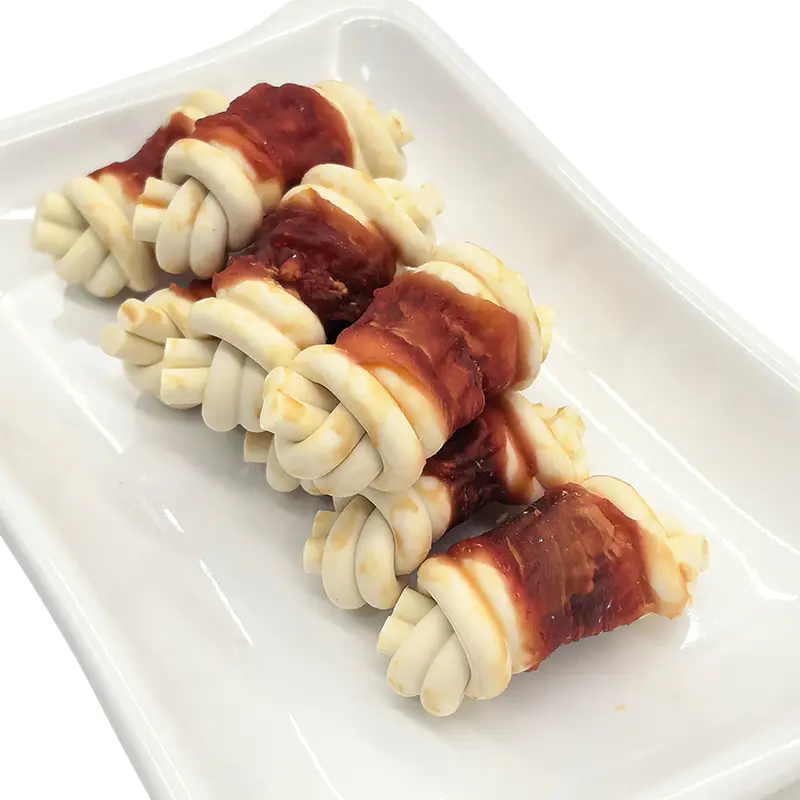
Real duck breast meat wrapped around a starch core only stays useful if it bonds to that core rather than sitting as a loose outer shell. A weak bond lets the meat layer separate in one piece during aggressive chewing, handing a dog a larger, unexpected chunk to swallow rather than the gradual wear the product is designed for. This matters more on an enthusiastic chewer that tugs and pulls at a treat rather than gnawing steadily, since that pulling motion is exactly what peels a poorly bonded wrap away from the core underneath it. Moisture transfer between the meat layer and the starch core during processing is what creates that bond, and the drying and bonding stage has to run its full course for Knotted Bone Dog Treats to hold together under real chewing pressure rather than just looking fully assembled off the line.
Knot Geometry Needs To Stay Consistent Across A Batch
The knot at each end is what gives these treats their resistance and extended chew time, but that only works if the knot ties to a consistent tightness and size run after run. A loosely tied knot on one unit and a tightly compressed one on the next means two treats from the same batch of Knotted Bone Dog Treats chew completely differently, and an inconsistent knot size across a size range also affects whether a piece is genuinely scaled for a small breed or just a scaled-down photo of a large-breed version. Automated tying equipment holds that tolerance far more consistently than hand-tied production, which is part of why knot dimensions on Knotted Bone Dog Treats get tracked as a batch-level spec rather than left to a single approved sample to represent the whole run.
Starch gelatinization, meat-to-core adhesion, and consistent knot tying are the three variables working together behind a finished piece, and getting all three right at once is what lets Knotted Bone Dog Treats hold the shape and chew resistance the knot itself promises, run after run rather than only in a hand-picked sample.
NEXT:Butterfly-Shaped Dog Chew Treats Bring Shape Design Into Dental Chews
-
Meat Wrapped Dog Treats
Our KN001 2.5-3-inch chicken coated starch bone chewable tablets are designed specifically for dogs,...View More -
Meat Wrapped Dog Treats
The KN003 organic protein dog chew treats are crafted with a wholesome blend of corn starch, sweet p...View More -
Knotted Bone Series
The KN004 Chewing Gum Grinding Teeth Cleaning Teeth Dog Snacks is a starch-based chew treat specific...View More -
Knotted Bone Series
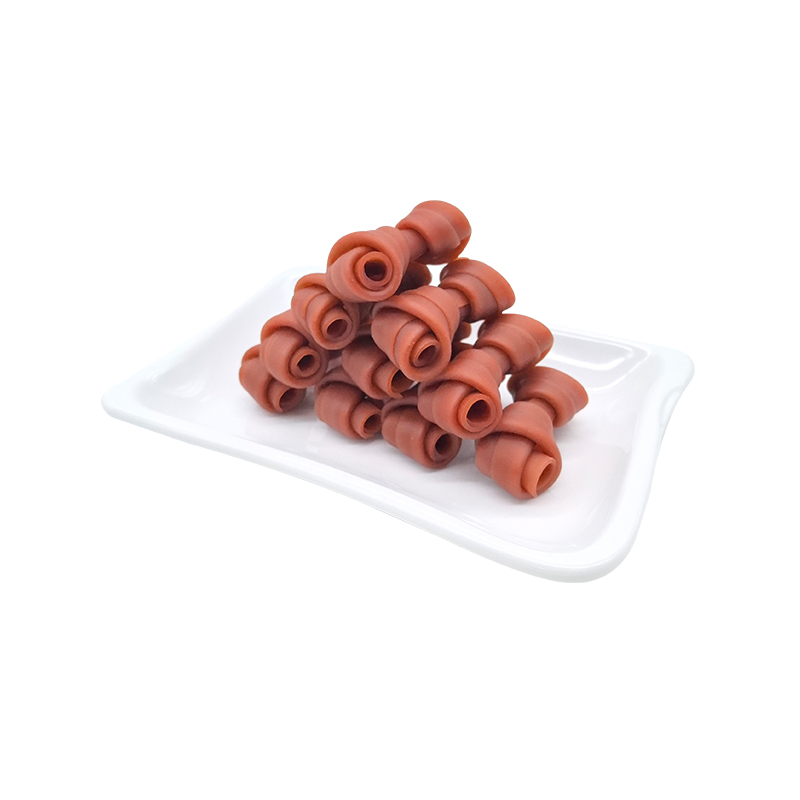
KN005 Dog single Color Bone Chew Snacks Safe and Healthy Pet Food is a healthy pet food made primari...View More -
Meat Wrapped Dog Treats
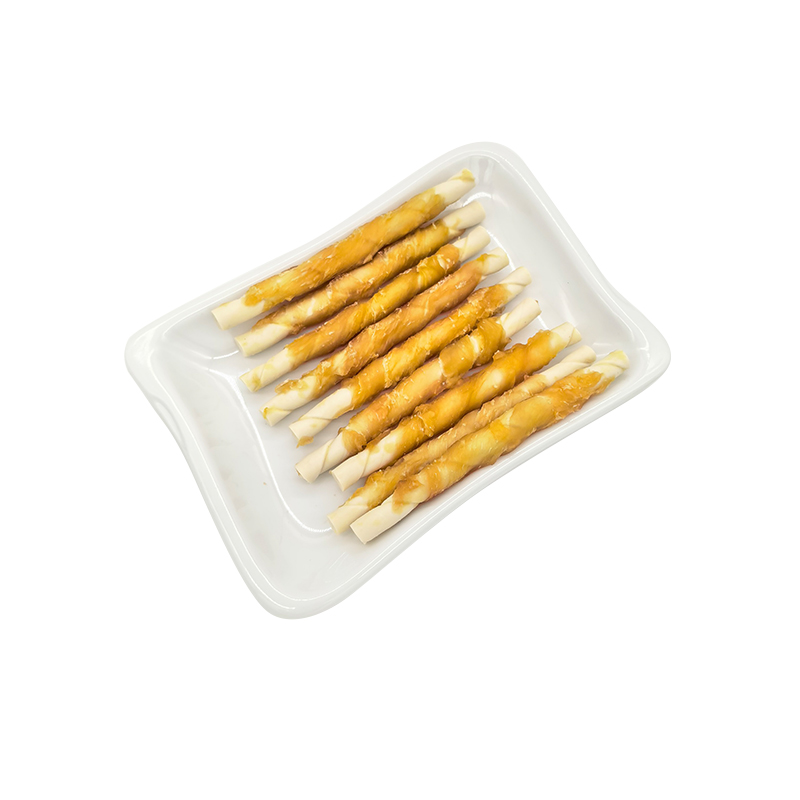
ST001 Milk Flavored 12cm Nutritious Meat-Wrapped Pet Chicken Rolls Stick combine premium chicken wit...View More -
Meat Wrapped Dog Treats
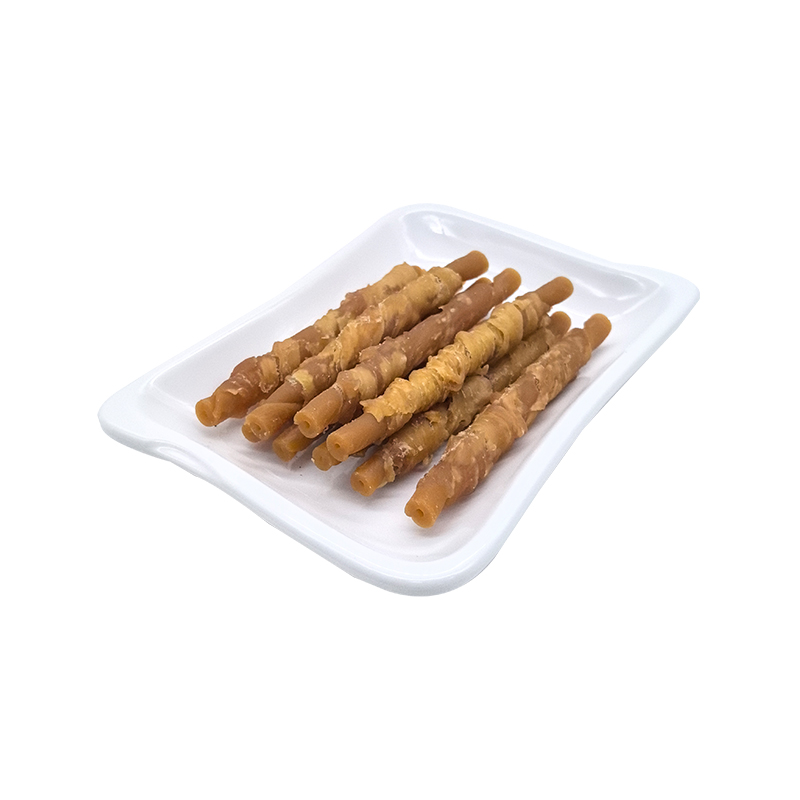
ST002 Chicken Flavor Organic Dog Dental Chew Stick is a healthy and tasty snack designed for dogs’ d...View More


TIME TO FEED YOUR PETS
-
Quick Links
-

The company integrates production and R&D functions, and its core business focuses on the R&D and production of pet snacks and pet chews.
-
Contact Us
Phone/WhatsApp:
+86 18067755187
+86-18657866096 E-mail:
[email protected]
[email protected] Add: No. 358-1, Longqing Road, Nanmingshan Street, Liandu District, Lishui, Zhejiang, China
