Welcome to Lishui Tengyu Pet Food Co., Ltd.
[email protected]

 English
 Español
 Deutsch


Industry News

Industry News
How Is Rawhide knotted bone Made?
A dog receives a rawhide knotted bone, carries it to a favorite spot, and begins chewing. What widely people never see is everything that happens before that product reaches a store shelf.
Unlike some pet treats that can be mixed, shaped, and packaged within a relatively short production process, a rawhide knotted bone goes through several stages before it takes on its familiar appearance. The knot at each end may look simple, but creating a consistent product requires much more than tying a piece of material together.
The process starts long before the finishing knot is formed.
It begins with the hide itself
One reason rawhide knotted bone products have existed for so many years is the nature of the raw material.
The hide must primary be prepared before it can be turned into a chew. At this stage, appearance is not the priority. The focus is on creating material that can be further processed into a consistent shape and texture.
People sometimes assume the knot is the widely important part of the product. In reality, the quality of the material used at the beginning often has a greater influence on the finishing result.
A well-formed knot cannot compensate for inconsistent raw materials.
The strips do not arrive ready-made
Looking at a finished rawhide knotted bone, it is easy to imagine that the strips arrive at the factory already prepared.
The reality is usually more involved.
The material often goes through cutting and sizing procedures so that individual pieces can be produced within a controlled range. This helps create products that look reasonably consistent from one batch to the next.
Anyone who has compared pet treats from different suppliers has probably noticed that consistency matters. Buyers may accept small variations, but they generally expect products within the same package to look similar.
The knot is more important than it looks
The knot is what gives a rawhide knotted bone its recognizable appearance.
However, the knot is not only decorative.
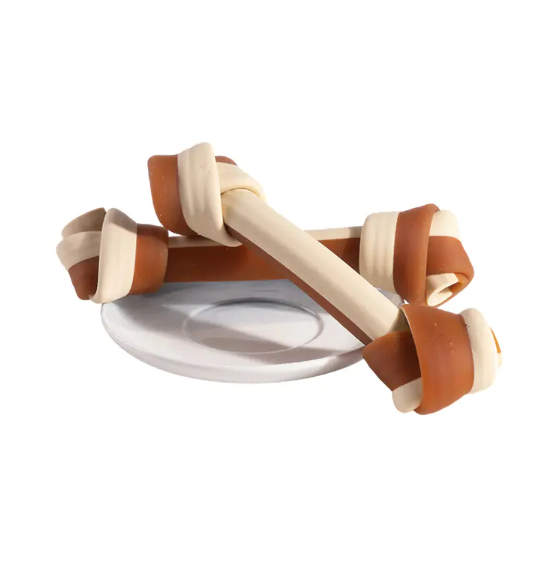
It influences the shape of the finished product and helps create the familiar bone-like profile that consumers recognize immediately.
Interestingly, hand-tied products still exist in parts of the industry. Some manufacturers continue to use manual operations for certain sizes, while others rely more heavily on standardized production methods. The exact approach varies from factory to factory.
What remains consistent is the importance of forming a stable knot.
Drying changes the product significantly
If someone were to compare a freshly formed product with a finished rawhide knotted bone, the differences could be noticeable.
Drying is one of the stages that changes the product widely dramatically.
During this period, moisture levels are reduced and the chew gradually develops the characteristics buyers expect. Shape stability, appearance, and texture can all be influenced by this stage.
It is also one reason production takes longer than many people assume.
The product cannot simply be tied and packaged immediately.
Quality checks happen throughout the process
People often picture quality inspection as the finishing step before shipment.
In practice, checks may occur throughout production.
Areas commonly reviewed include:
material consistency
product dimensions
knot formation
appearance standards
packaging condition
The goal is not perfection. Small variations are normal in many pet treat categories. Instead, the objective is to maintain a reasonable level of consistency across larger production runs.
Why size options are so common
Walk through a pet store and you will often find more than one size of rawhide knotted bone.
This variety exists for a simple reason.
Dogs vary enormously.
A product suitable for a small breed may look very different from one intended for a larger dog. As a result, manufacturers often produce multiple sizes rather than relying on a single format. Similar size variations can be seen throughout the knotted bone category.
The finished product hides a surprisingly long process
When people pick up a rawhide knotted bone, the product often appears straightforward.
A piece of beefhide. Two knots. A familiar shape.
Yet the path from raw material to finished chew includes preparation, cutting, shaping, knotting, drying, inspection, and packaging. Each stage contributes something to the finishing product.
That may be why the category has remained part of the pet industry for so long. The finished chew looks simple, but behind that simplicity is a production process built around consistency, repeatability, and attention to detail.
For widely dogs, none of this matters. They are interested in the chew itself.
For manufacturers, distributors, and buyers, however, understanding how a rawhide knotted bone is made offers a different perspective on a product that many people see every day without ever considering how it reached the shelf.
-
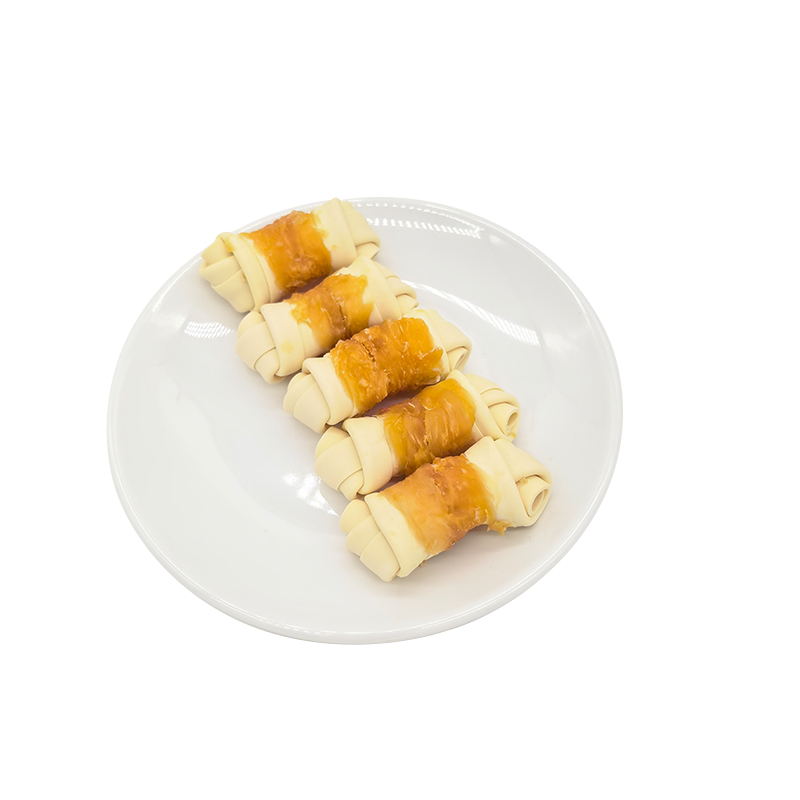
Meat Wrapped Dog Treats
Our KN001 2.5-3-inch chicken coated starch bone chewable tablets are designed specifically for dogs,...View More -
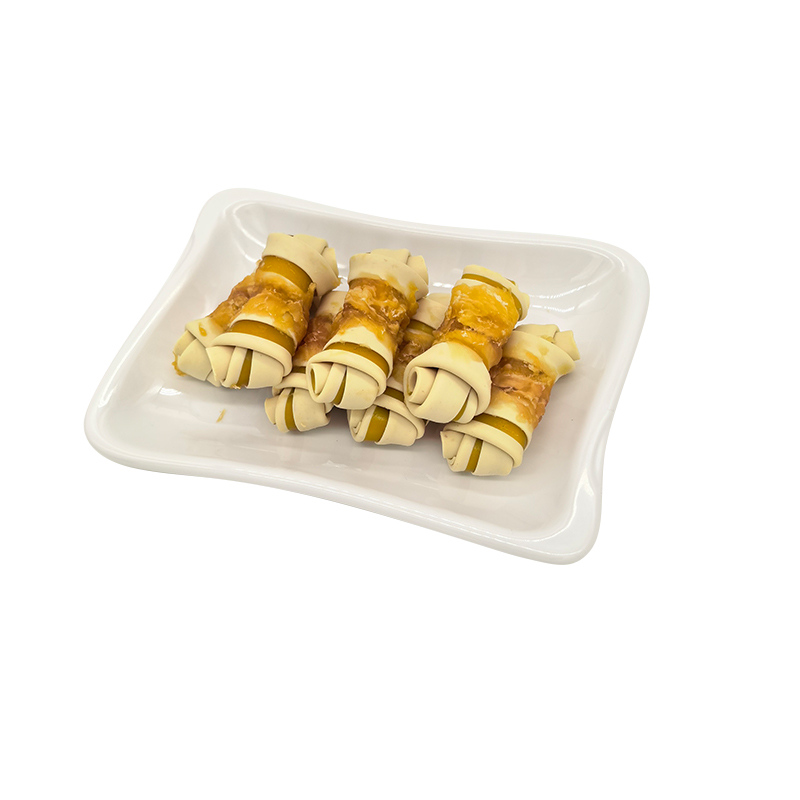
Meat Wrapped Dog Treats
The KN003 organic protein dog chew treats are crafted with a wholesome blend of corn starch, sweet p...View More -
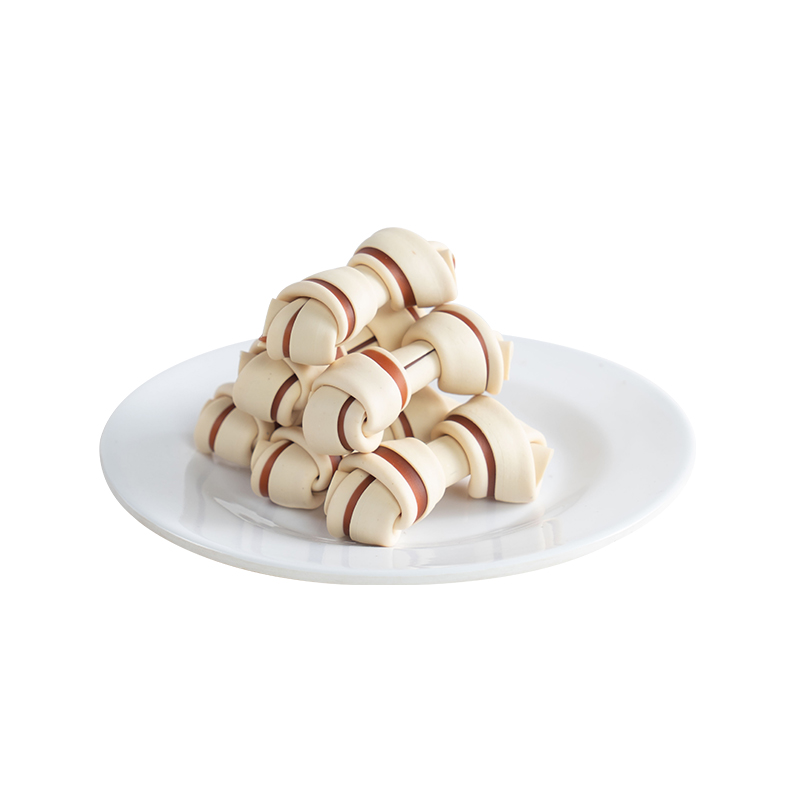
Knotted Bone Series
The KN004 Chewing Gum Grinding Teeth Cleaning Teeth Dog Snacks is a starch-based chew treat specific...View More -
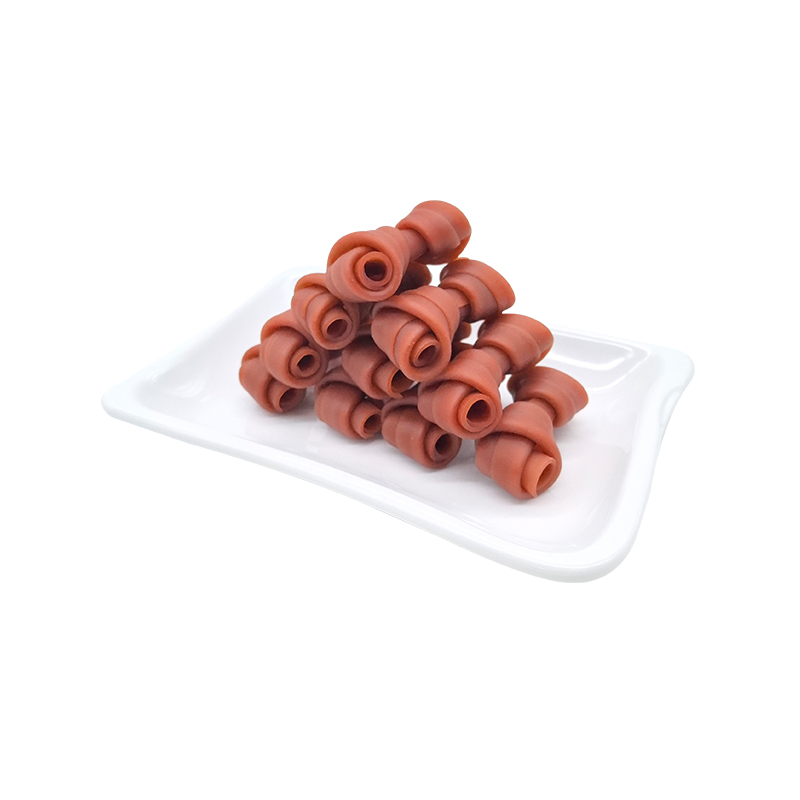
Knotted Bone Series
KN005 Dog single Color Bone Chew Snacks Safe and Healthy Pet Food is a healthy pet food made primari...View More -
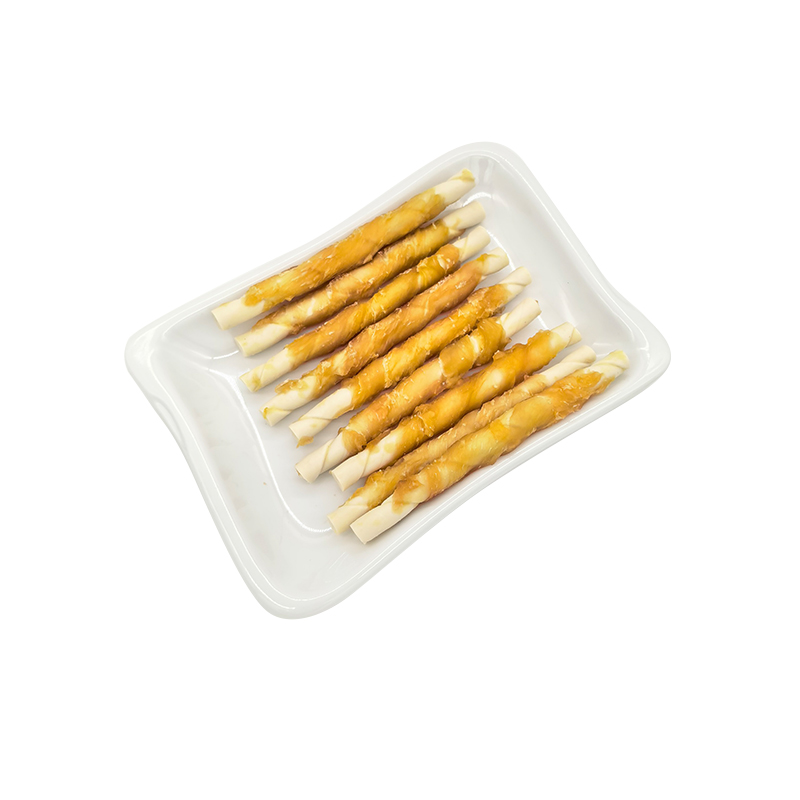
Meat Wrapped Dog Treats
ST001 Milk Flavored 12cm Nutritious Meat-Wrapped Pet Chicken Rolls Stick combine premium chicken wit...View More -
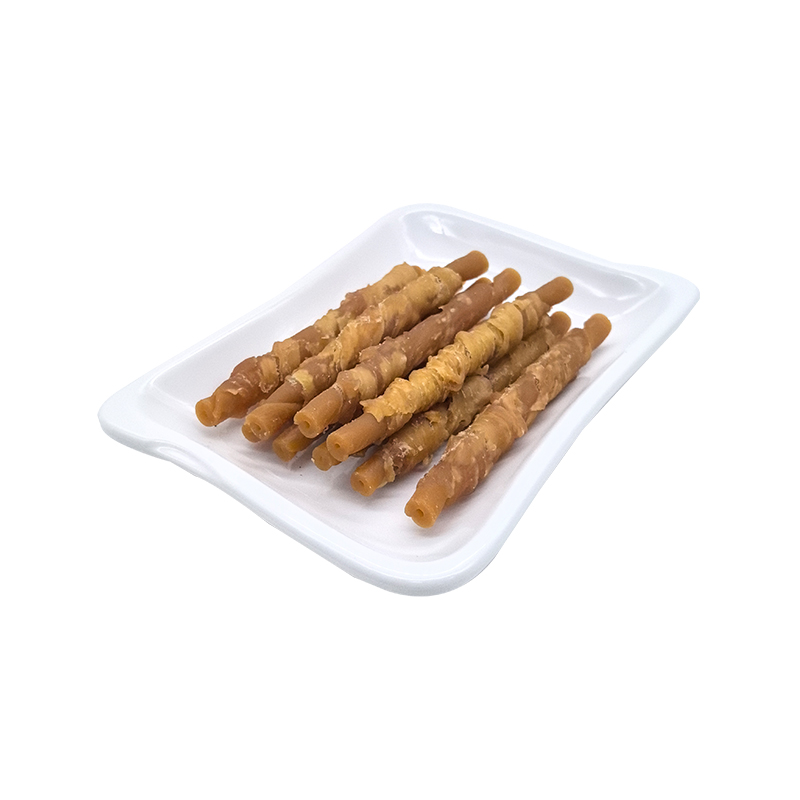
Meat Wrapped Dog Treats
ST002 Chicken Flavor Organic Dog Dental Chew Stick is a healthy and tasty snack designed for dogs’ d...View More


TIME TO FEED YOUR PETS
-
Quick Links
-

The company integrates production and R&D functions, and its core business focuses on the R&D and production of pet snacks and pet chews.
-
Contact Us
Phone/WhatsApp:
+86 18067755187
+86-18657866096 E-mail:
[email protected]
[email protected] Add: No. 358-1, Longqing Road, Nanmingshan Street, Liandu District, Lishui, Zhejiang, China
